

Episode: KPN 16-08-2026

Why Bangladesh is moving to fence its border with Myanmar Bangladesh’s plan to fence parts of its 270-kilometer border with Myanmar reflects a fundamental shift in the security environment along […]


 play_arrow
Episode: KPN 30-09-2026 Kaladan Podcast
 play_arrow
Episode: KPN 29-09-2026 Kaladan Podcast
 play_arrow
Episode: KPN 28-09-2026 Kaladan Podcast
 play_arrow
Episode: KPN 27-09-2026 Kaladan Podcast
 play_arrow
Episode: KPN 17-08-2026 Kaladan Podcast
Myanmar must establish credible conditions for the voluntary, safe and dignified return of Rohingya refugees rather than relying on disputed verification figures and vague security assurances, as Bangladesh continues to question Naypyidaw’s latest claims about the scale of the 2017 exodus and the number of refugees eligible for repatriation.
Bangladesh submitted a list of 828,824 displaced people to Myanmar for verification. Myanmar said that, as of July 31, it had verified 426,545 names and identified 308,797 people as former residents of Rakhine State.
Myanmar’s Ministry of Foreign Affairs also claimed that more than 540,000 people crossed into Bangladesh following the August 2017 military crackdown, while more than 200,000 remained in northern Rakhine.
Bangladesh has rejected those figures and questioned the reliability and completeness of Myanmar’s verification process.
Bangladesh Hosting More Than 1.2 Million Rohingya
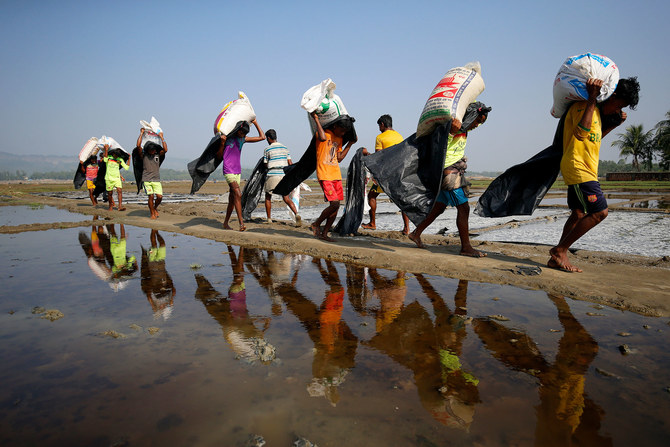
Bangladesh is now hosting more than 1.2 million Rohingya, including children born in the refugee camps during years of displacement.
The prolonged crisis has placed significant humanitarian, economic and environmental pressure on Bangladesh, while international funding for the refugee response has declined.
Research by the Refugee and Migratory Movements Research Unit, or RMMRU, has pointed to worsening living conditions in the camps, including gender-based violence, physical abuse, sexual exploitation, forced marriages, psychological distress and security concerns.
Repeated attempts to begin repatriation have failed, leaving Bangladesh and humanitarian agencies struggling to support a large refugee population with diminishing resources.
Verification Process Faces Questions
Myanmar has said it will accept the return of people verified as former residents of Rakhine State once security conditions improve.
But critics argue that the process remains unclear and fails to address the core conditions necessary for sustainable repatriation.
Bangladesh has questioned how Myanmar conducted its verification and whether the process adequately reflects the identities, family records and current circumstances of refugees who have spent years outside Myanmar.
Concerns have also focused on Myanmar’s continued refusal to officially recognise the Rohingya as an ethnic community.
Myanmar’s foreign ministry repeatedly used the term “Bengalis” in referring to the displaced population, a designation strongly rejected by Rohingya, who say it denies their ethnic identity and historical roots in Rakhine State.
Rights Must Come Before Repatriation
A credible repatriation process, according to the position outlined in the commentary, must go beyond identifying names on a list.
Myanmar would need to provide concrete guarantees of security, citizenship and other fundamental rights, freedom of movement and access to basic services so returnees can rebuild their lives.
Any process should also be voluntary, transparent and subject to sufficient safeguards to prevent renewed persecution.
Improved security cannot simply be presented as a future condition without a clear plan for how that security will be established and sustained.
UN Findings Remain Central to 2017 Exodus
The UN Independent International Fact-Finding Mission on Myanmar documented the displacement of more than 700,000 Rohingya following military operations that began in August 2017.
The mission found reasonable grounds to infer genocidal intent in the conduct of Myanmar’s military and security forces.
Those findings sharply contrast with Myanmar’s latest claim that just over 540,000 people crossed into Bangladesh after the 2017 violence.
International Accountability Processes Continue
International legal processes have also become an important part of the broader Rohingya crisis.
The International Court of Justice has heard proceedings concerning allegations that Myanmar violated its obligations under the Genocide Convention.
Separately, the International Criminal Court is investigating alleged crimes against humanity and other crimes involving individual perpetrators.
The commentary argues that accountability efforts should reinforce, rather than remain disconnected from, diplomatic efforts to establish the conditions required for safe and dignified Rohingya return.
Bangladesh, UN and Myanmar Need Clear Benchmarks
Any future repatriation framework should involve cooperation among Myanmar, Bangladesh, the United Nations and relevant humanitarian agencies.
Clear benchmarks should include security guarantees, recognition of legal status and rights, freedom of movement, access to healthcare and education, livelihood opportunities and protection against renewed violence.
The process should also be transparent enough for refugees themselves to understand the conditions under which they would return.
For Rohingya refugees, repatriation remains closely tied to the question of whether Myanmar can guarantee not only physical safety, but also citizenship, dignity and the right to live freely in their homeland.
Without those conditions, verification alone is unlikely to create the confidence needed for voluntary return.


Why Bangladesh is moving to fence its border with Myanmar Bangladesh’s plan to fence parts of its 270-kilometer border with Myanmar reflects a fundamental shift in the security environment along […]


