Episode: KPN 27-09-2026

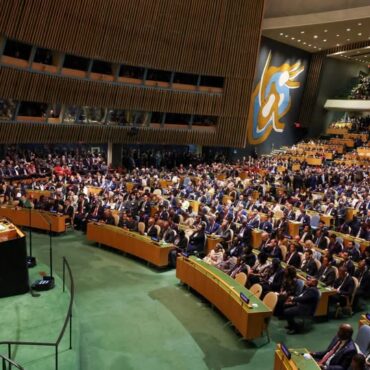
UN Chief says Global crises share a common root: The changing nature of power United Nations Secretary-General António Guterres used his final address to the UN General Assembly’s annual General […]


 play_arrow
Episode: KPN 30-09-2026 Kaladan Podcast
 play_arrow
Episode: KPN 29-09-2026 Kaladan Podcast
 play_arrow
Episode: KPN 28-09-2026 Kaladan Podcast
 play_arrow
Episode: KPN 27-09-2026 Kaladan Podcast
play_arrow
Episode: KPN 28-09-2026 Kaladan Podcast
Nine years after hundreds of thousands of Rohingya fled Myanmar and sought refuge in Bangladesh, life in the sprawling camps of Ukhiya and Teknaf remains defined by uncertainty. With safe repatriation still out of reach, humanitarian assistance under severe pressure and families facing insecurity and few prospects for the future, some Rohingya are increasingly looking for ways to escape the confines of camp life.
For some, that means attempting dangerous journeys by sea toward Malaysia or Indonesia. Others seek opportunities outside the camps despite restrictions and the risks of exploitation, trafficking, detention or other protection concerns.
The question facing the Rohingya community is increasingly stark: after nine years of waiting, what future remains inside the camps?
Nine years after the 2017 exodus
More than 750,000 Rohingya fled Myanmar for Bangladesh after Myanmar security forces launched operations in northern Rakhine State in August 2017.
They joined Rohingya who had escaped previous waves of persecution and displacement.
Today, around 1.2 million Rohingya refugees are living in Bangladesh, the vast majority in the densely populated camps of Cox’s Bazar, according to UN agencies.
The camps were initially regarded as a place of temporary refuge while international diplomacy sought conditions for repatriation.
Nine years later, temporary displacement has become a prolonged exile.
Large-scale voluntary repatriation has not taken place, while renewed conflict in Rakhine State has made the prospects of an early return increasingly uncertain.
Life inside the camps remains precarious
The challenges facing Rohingya refugees go beyond overcrowding.
Families remain heavily dependent on humanitarian assistance for food, shelter, healthcare and other basic needs. Employment and formal livelihood opportunities are highly restricted, while educational opportunities for young people remain limited.
Funding shortages are placing further pressure on the humanitarian system.
In 2026, the United Nations and humanitarian partners appealed for $710.5 million to cover the most critical needs of Rohingya refugees and Bangladeshi host communities.
The appeal was 26 percent smaller than the 2025 plan and was described by humanitarian agencies as covering only the minimum required to maintain life-saving assistance.
For refugees who have already spent most or all of their childhood or early adulthood in the camps, diminishing assistance raises a larger question about how long dependence on humanitarian aid can continue without viable alternatives.
Food assistance comes under pressure
Food insecurity has become another major concern.
Nearly 1.2 million Rohingya in Cox’s Bazar and Bhasan Char continue to depend heavily on humanitarian assistance, while food insecurity and malnutrition remain high.
In April, the World Food Programme introduced a needs-based system for monthly food assistance as funding pressures forced aid agencies to prioritize the most vulnerable households.
Under the system, assistance varies according to household food-security levels.
The change illustrates a wider transformation taking place in the Rohingya humanitarian response: after years of broad assistance, declining resources are forcing humanitarian organizations to make increasingly difficult choices over who receives what level of support.
Insecurity adds another layer of fear
Security has long been a serious concern inside the camps.
Killings, kidnappings, extortion, trafficking, armed-group activity and other forms of violence have been reported over the years, creating fear among ordinary refugees.
UNHCR reported that the security situation improved during 2025 compared with the previous year, with killings and serious assaults declining by 29 percent. But the agency described conditions as still fragile.
For families already living in congested shelters with few livelihood options, insecurity can add another incentive to search for alternatives elsewhere.
Women, children and young people can be particularly vulnerable to trafficking, exploitation and other protection risks.
A generation growing up without a clear future
One of the deepest problems is time.
Children who arrived in Bangladesh in 2017 are now teenagers or young adults.
Many younger children were born in the camps and have never seen the villages in Rakhine State their parents call home.
Yet their prospects inside Bangladesh remain constrained.
Without meaningful access to higher education, recognized qualifications and sustainable livelihoods, prolonged displacement risks producing another generation whose choices are severely limited.
For some young Rohingya, remaining indefinitely in a refugee camp can increasingly appear to offer neither a pathway home nor a pathway forward.
Dangerous journeys are increasing
The consequences can already be seen at sea.
According to an analysis of UN data by Save the Children, 2,907 Rohingya and other refugees departed Bangladesh and Myanmar by boat between January 1 and March 31, 2026 — about 85 percent more than during the same period in 2025.
More than half of those making such journeys were women and children.
The Bay of Bengal and Andaman Sea routes are notoriously dangerous. Refugees travelling irregularly can face overcrowded boats, abuse by smugglers and traffickers, starvation, dehydration, abandonment at sea and death.
Yet people continue to take those risks.
That raises an important distinction: leaving a camp should not automatically be interpreted as simply seeking economic opportunity.
For some refugees, movement may instead reflect an accumulation of pressures — insecurity, hunger, lack of education, absence of livelihoods, family separation and diminishing confidence that their displacement will end soon.
Why can’t they simply return to Myanmar?
For most Rohingya, returning to their homeland remains the preferred long-term solution — but only if return is voluntary, safe, dignified and sustainable.
Those conditions do not currently exist.
Myanmar remains affected by armed conflict, and the military has lost control over large areas of Rakhine State to the Arakan Army.
Rohingya remaining inside Rakhine have continued to face serious protection concerns amid fighting and restrictions.
At the same time, the fundamental question of citizenship remains unresolved.
Myanmar has historically denied recognition of the Rohingya as an official ethnic group, leaving generations effectively stateless.
For refugees, therefore, repatriation is not simply about crossing the Naf River back into Myanmar.
It involves questions of citizenship, freedom of movement, security, access to land, education and livelihoods, restoration of rights and guarantees against renewed persecution.
More Rohingya have fled Rakhine
The paradox is particularly stark.
While Bangladesh and the international community continue discussing repatriation of Rohingya already in the camps, continuing conflict and abuses in Rakhine have driven additional Rohingya toward Bangladesh.
This means the refugee crisis is not merely unresolved; displacement pressures continue.
Without improved conditions inside Rakhine State, repatriation discussions risk remaining disconnected from the realities confronting Rohingya on both sides of the border.
From a temporary refuge to prolonged confinement
Bangladesh has carried a substantial humanitarian burden since the mass influx of 2017, while communities in Cox’s Bazar have also faced pressure on land, public services, infrastructure and local resources.
But nine years of displacement have exposed the limitations of an emergency response that was never designed to become permanent.
Humanitarian assistance can keep people alive.
It cannot, by itself, provide a political solution to statelessness.
Nor can food rations replace citizenship, education, security, freedom or a viable future.
That distinction helps explain why some Rohingya may be prepared to take extraordinary risks to leave the camps even when the alternatives are dangerous.
The question after nine years
The movement of Rohingya away from the camps should therefore be examined not only as a security or migration issue but also as a symptom of prolonged displacement.
Why would a refugee leave a place where food, shelter and humanitarian services are available and risk an uncertain journey?
For some, the answer may lie in what is missing.
Nine years after the 2017 exodus, Rohingya refugees still have no clear pathway to return safely to Myanmar, limited opportunities to build independent lives in Bangladesh, and declining confidence that international diplomacy will soon resolve their situation.
Until those underlying conditions change, attempts to leave the camps — whether through dangerous maritime routes or other irregular journeys — are likely to remain part of the wider Rohingya protection crisis.
For a community that has already spent nine years waiting, the central question is no longer only when can they return home?
It is also becoming:
How long can more than a million people be expected to live without a clear future?

UN Chief says Global crises share a common root: The changing nature of power United Nations Secretary-General António Guterres used his final address to the UN General Assembly’s annual General […]