
Episode: KPN 28-09-2026

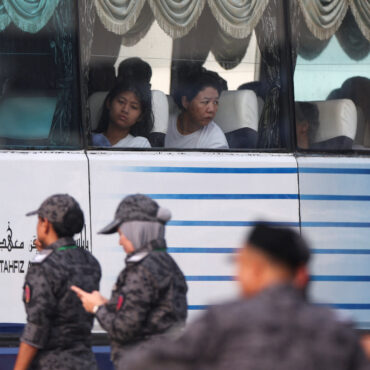
Nine years in exile: Why are Rohingya leaving the Camps of Ukhiya? Nine years after hundreds of thousands of Rohingya fled Myanmar and sought refuge in Bangladesh, life in the […]


 play_arrow
Episode: KPN 30-09-2026 Kaladan Podcast
 play_arrow
Episode: KPN 29-09-2026 Kaladan Podcast
 play_arrow
Episode: KPN 28-09-2026 Kaladan Podcast
 play_arrow
Episode: KPN 27-09-2026 Kaladan Podcast
play_arrow
Episode: KPN 29-09-2026 Kaladan Podcast
Bangladesh has called on the United Nations to bring Myanmar, regional countries and other influential international actors to the negotiating table in a renewed effort to secure the voluntary, safe and dignified return of more than 1.2 million Rohingya refugees now sheltering in Bangladesh.
Bangladesh’s Permanent Representative to the United Nations, Ambassador Irene Zubaida Khan, said in a recent interview with BBC World Service that the UN could not resolve the protracted Rohingya crisis by itself and that member states — particularly the five permanent members of the UN Security Council — must assume greater responsibility.
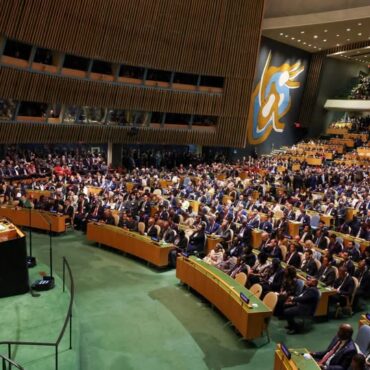
Her remarks followed Prime Minister Tarique Rahman’s address to the 81st session of the UN General Assembly on September 24, where he called for stronger international action on the Rohingya crisis.
Bangladesh seeks broader diplomatic engagement
Khan said Bangladesh expects the UN to help bring all relevant parties into a political process aimed at finding a durable solution.
Those participants, she said, should include Bangladesh as the country hosting the refugees, Myanmar, countries in the region and states further afield that either have influence over Myanmar or possess the financial capacity to support a solution.
Dhaka’s position is that humanitarian assistance alone cannot resolve a crisis rooted in displacement from Myanmar.
Bangladesh maintains that the Rohingya crisis originated in Myanmar and that its ultimate solution must therefore be found there.
Prime Minister Rahman reiterated that position during his UN visit, arguing that the displaced Rohingya population must eventually be able to return to Myanmar in safety.
Three priorities: refugees, Bangladesh and a durable solution
Khan identified three immediate priorities for the international community.
The first is to continue humanitarian support for the more than 1.2 million Rohingya refugees in Bangladesh.
The second is to support Bangladesh as the host country as it manages the social, economic and humanitarian pressures associated with the prolonged refugee crisis.
The third — and ultimately most important — is to pursue a lasting political solution.
The UN says some 1.2 million Rohingya are currently living in Bangladesh, with the overwhelming majority in the camps of Cox’s Bazar and others on Bhasan Char.
Humanitarian funding under growing pressure
Khan’s call comes as humanitarian agencies face mounting financial pressure.
In May, the United Nations and its partners appealed for $710.5 million to meet the most critical needs of Rohingya refugees in Cox’s Bazar and Bhasan Char, as well as vulnerable members of Bangladeshi host communities.
The 2026 appeal is 26 percent lower than the previous year’s plan and covers what the UN describes as only the minimum required to sustain life-saving assistance.
Humanitarian agencies have warned that declining resources could threaten essential services including food, shelter, healthcare, education, water and sanitation.
The funding crisis has added urgency to Bangladesh’s argument that the international community cannot indefinitely manage the Rohingya crisis solely as a humanitarian emergency.
A generation born and raised in refugee camps
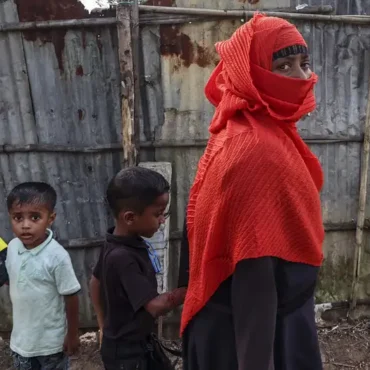
Another major concern is the growing number of Rohingya children spending their entire childhood in displacement.
An estimated 30,000 children are born in the camps each year, according to UN Secretary-General’s Special Envoy on Myanmar Julie Bishop.
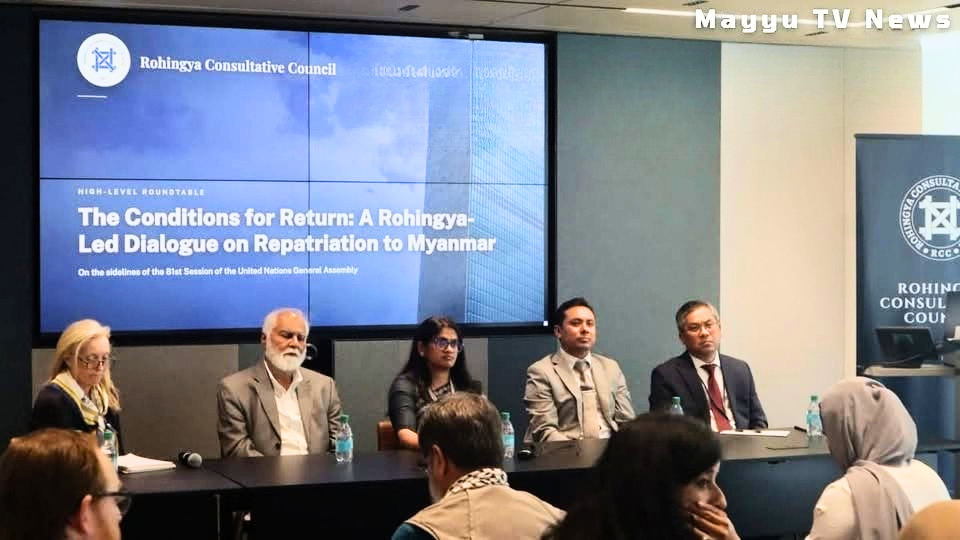
Speaking at a high-level Rohingya event during UN General Assembly week, Bishop warned that for a child born during the mass displacement of 2017, life as a refugee now represents their entire childhood.
Khan similarly raised concern that an entire generation is growing up in the camps without a clear long-term future.
Nine years after the 2017 mass exodus from Myanmar, this demographic reality is adding pressure to questions over education, livelihoods, protection and the future of young Rohingya.
Rohingya want to return — but under safe conditions
Bangladesh says repatriation remains the preferred long-term solution.
Khan said Rohingya refugees themselves want to return to their homeland, but their return must take place under conditions that guarantee safety and dignity.
The UN’s position is that repatriation must be voluntary, safe, dignified and sustainable.
Those conditions remain difficult to establish amid continuing conflict and instability in Myanmar, particularly in Rakhine State.
The question of Rohingya rights and citizenship inside Myanmar also remains unresolved.
As a result, despite repeated discussions over repatriation since the 2017 exodus, no large-scale return has taken place.
Dhaka wants political responsibility inside Myanmar
Khan said a meaningful repatriation process would require political arrangements under which the authorities in Myanmar accept responsibility for receiving the Rohingya.
At the same time, international support would be required inside Myanmar to create conditions under which refugees could return safely and rebuild their lives.
That makes the Rohingya crisis more than a bilateral issue between Bangladesh and Myanmar.
For Dhaka, countries capable of influencing developments in Myanmar must also become part of efforts to find a solution.
Security Council powers face renewed scrutiny
Khan’s comments also touched on a broader debate over the effectiveness of the United Nations in resolving major international crises.
She said the UN itself could not be expected to solve the Rohingya crisis without political commitment from its member states.
She placed particular emphasis on the five permanent members of the Security Council — China, France, Russia, the United Kingdom and the United States — whose divisions can limit collective Security Council action.
Her remarks shift part of the focus from what the UN institution itself can do to what its most powerful member states are willing to do.
For the Rohingya, that distinction has become increasingly significant after nine years of displacement.
Humanitarian agencies can provide food, shelter, healthcare and education, but they cannot themselves create the political and security conditions necessary for refugees to return to Myanmar.
Nine years on, diplomacy faces the central test
Bangladesh’s latest appeal therefore presents the international community with two interconnected challenges.
The immediate challenge is to sustain humanitarian assistance for more than a million refugees and the Bangladeshi communities hosting them.
The longer-term challenge is political: bringing Myanmar and countries with sufficient diplomatic influence to the table to establish conditions under which Rohingya can return voluntarily, safely and with dignity.
For Rohingya families who have spent nine years in the camps — and for thousands of children born there every year — the effectiveness of international diplomacy will ultimately be measured not only by meetings and statements, but by whether they produce conditions in which refugees can exercise a genuine choice about returning home.

Nine years in exile: Why are Rohingya leaving the Camps of Ukhiya? Nine years after hundreds of thousands of Rohingya fled Myanmar and sought refuge in Bangladesh, life in the […]