Episode: KPN 30-08-2026

OHCHR report: Around 2,000 acres of Rohingya land confiscated in AA-controlled Rakhine August 29, 2026: Around 2,000 acres of land associated with Rohingya communities have reportedly been confiscated in Arakan […]


 play_arrow
Episode: KPN 25-10-2026 Kaladan Podcast
 play_arrow
Episode: KPN 24-10-2026 Kaladan Podcast
 play_arrow
Episode: KPN 23-10-2026 Kaladan Podcast
 play_arrow
Episode: KPN 22-10-2026 Kaladan Podcast
 play_arrow
Episode: KPN 31-08-2026 Kaladan Podcast
Nine years after the 2017 military campaign in Rakhine State forced hundreds of thousands of Rohingya from their homes, justice remains elusive and most displaced Rohingya are still unable to return safely, according to Nicholas Koumjian, head of the UN’s Independent Investigative Mechanism for Myanmar (IIMM).
In a statement issued on August 24 to mark the ninth anniversary of the 2017 violence, Koumjian said Rohingya communities continue to live with the consequences of killings, sexual violence, destruction of homes and livelihoods, forced displacement and prolonged insecurity.
“No one has been held accountable for these crimes,” Koumjian said.
He said many Rohingya who survived the 2017 violence continue to describe the anniversary period as among the darkest moments of their lives.
Rohingya Still Unable to Return Home
Koumjian said many displaced Rohingya want to return to their communities in Myanmar but remain unable to do so because their home areas are affected by conflict and instability.
“They want to go home, but their homes are a battlefield,” he said.
According to the IIMM chief, years of violence, displacement, discrimination and insecurity have fractured Rohingya communities and left many survivors without a realistic pathway to return.
Nearly 700,000 Rohingya fled across the border into Bangladesh during and after the 2017 military campaign in northern Rakhine State, according to United Nations estimates.
Most remain in refugee camps in and around Cox’s Bazar, joining Rohingya who had fled earlier waves of persecution and violence.
Rohingya Remaining in Myanmar Face Continuing Threats
Koumjian also warned that Rohingya who remain in Myanmar continue to face serious threats to their safety.
He cited reports of sexual violence, discrimination, extrajudicial killings and persistent insecurity affecting Rohingya communities.
Some Rohingya have also continued to attempt dangerous journeys by sea to reach other countries, often exposing themselves to trafficking, exploitation and death at sea.
The ongoing conflict in Rakhine State has further complicated prospects for voluntary, safe, dignified and sustainable repatriation.
IIMM Says Evidence Points to Multiple Perpetrators
The Independent Investigative Mechanism for Myanmar has collected and analysed large volumes of evidence, witness testimony and documentary material relating to serious international crimes committed in Myanmar.
According to Koumjian, the evidence gathered by the mechanism concerns alleged perpetrators from the Myanmar military as well as other armed groups operating in the country.
The IIMM does not itself prosecute suspects. Its mandate is to collect, preserve and analyse evidence and share material with courts and jurisdictions that are pursuing criminal accountability.
Evidence Shared With International Courts
The mechanism has provided evidence relevant to legal proceedings concerning crimes against the Rohingya, including proceedings before the International Court of Justice.
It has also shared material with judicial authorities in Argentina and other jurisdictions pursuing accountability cases related to Myanmar.
Koumjian said he hoped future judicial decisions would contribute to accountability for crimes committed against Rohingya communities.
ICJ Case Remains Central to Rohingya Accountability Efforts
The International Court of Justice is considering a case brought under the Genocide Convention concerning Myanmar’s treatment of the Rohingya.
While the ICJ determines state responsibility rather than individual criminal guilt, the case has become one of the most significant international legal proceedings concerning the 2017 violence.
Separate accountability efforts in other jurisdictions are examining potential individual criminal responsibility.
For many Rohingya survivors, however, accountability remains inseparable from the right to return home safely and live with security, dignity and recognition of their identity.
Nine years after the mass displacement, that prospect remains uncertain.
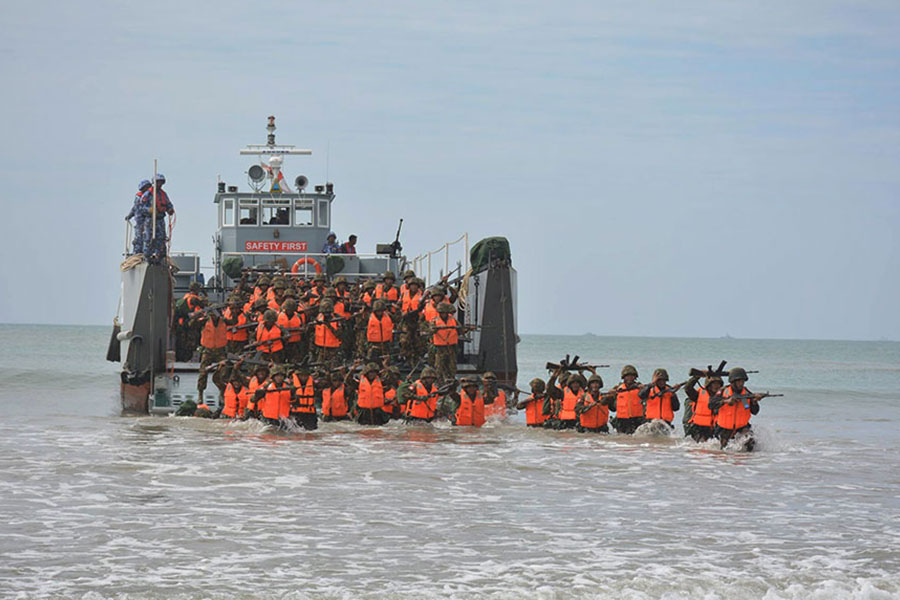

OHCHR report: Around 2,000 acres of Rohingya land confiscated in AA-controlled Rakhine August 29, 2026: Around 2,000 acres of land associated with Rohingya communities have reportedly been confiscated in Arakan […]