

Episode: KPN 19-08-2026

7,656 Rohingya, 504 Bangladeshi nationals identified across Jammu and Kashmir, Government says The Jammu and Kashmir government has informed a high-level committee that 7,656 Rohingya and 504 Bangladeshi nationals have […]


 play_arrow
Episode: KPN 30-09-2026 Kaladan Podcast
 play_arrow
Episode: KPN 29-09-2026 Kaladan Podcast
 play_arrow
Episode: KPN 28-09-2026 Kaladan Podcast
 play_arrow
Episode: KPN 27-09-2026 Kaladan Podcast
 play_arrow
Episode: KPN 20-08-2026 Kaladan Podcast
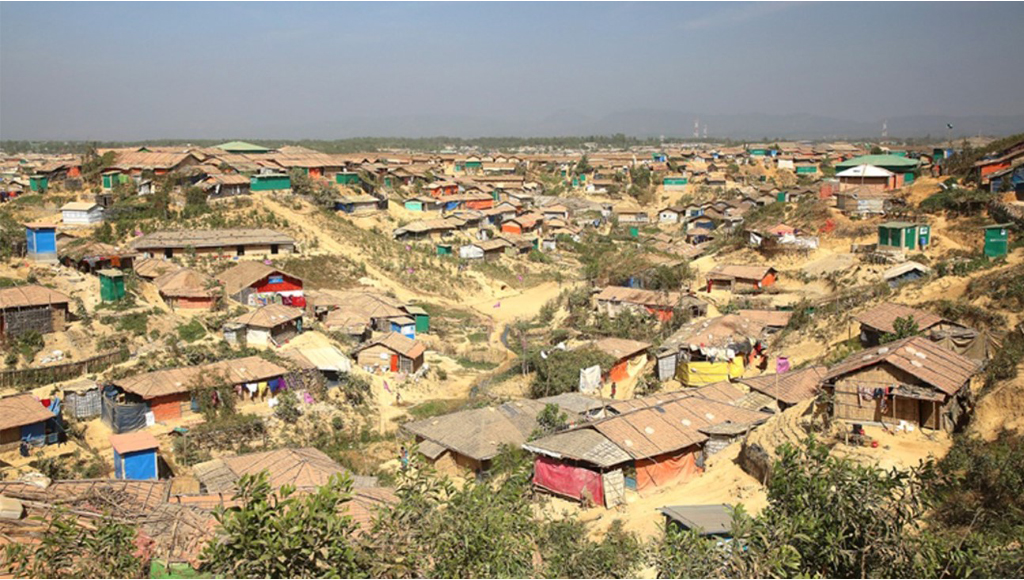
The United Council of Rohingya (UCR), an elected representative body of Rohingya refugees in Cox’s Bazar, has rejected Myanmar’s latest claims on repatriation, accusing the military-backed authorities of attempting to “rewrite history” and avoid accountability for abuses committed against the Rohingya.
In a statement issued on Monday, the UCR described an August 15 statement by Myanmar’s Ministry of Foreign Affairs as “misleading propaganda” and challenged its claims point by point.
The organisation said any repatriation process must be voluntary, safe, dignified and sustainable, with guarantees of full citizenship, legal rights and international protection.
Myanmar Says More Than 308,000 Refugees Verified
Myanmar’s foreign ministry said it had verified 308,797 displaced people currently in Bangladesh as former residents of Rakhine State and was prepared to receive them once security conditions improved.
The ministry said Bangladesh had submitted a list containing 828,824 names for verification.
According to Myanmar’s figures, 113,507 names could not be verified, while 4,241 people were identified as having alleged links to terrorist activities.
Myanmar also maintained that any repatriation should proceed under existing bilateral agreements between Bangladesh and Myanmar.
The UCR rejected that approach, arguing that the Rohingya crisis involves questions of international law, human rights and accountability and therefore cannot be treated solely as a bilateral matter.
UCR Rejects Use of ‘Bengali’ Label
At the centre of the UCR’s response was the issue of Rohingya identity.
The organisation strongly criticised Myanmar’s continued use of the term “Bengali” to describe Rohingya, saying the label is intended to deny their ethnic identity and historical presence in Rakhine State.
“The term ‘Bengali’ is a weapon of erasure,” the UCR said.
The group called on the international community to recognise the Rohingya as an ethnic community of Myanmar and said any repatriation process must acknowledge their identity without forcing refugees to accept another designation.
Group Disputes Myanmar Narrative on 2016–17 Military Operations
The UCR also rejected Myanmar’s assertion that military operations in 2016 and 2017 were legitimate responses to attacks by the Arakan Rohingya Salvation Army, or ARSA.
The organisation said the military’s so-called clearance operations involved mass killings, rape, widespread village burnings and forced displacement documented by international investigations.
The UCR characterised attempts to place primary responsibility on ARSA as “an inversion of reality” and said such claims ignored the scale of abuses suffered by Rohingya civilians.
The group said accountability for alleged atrocities must remain part of any meaningful process toward resolving the crisis.
UCR Challenges Myanmar’s Displacement Figures
Myanmar’s foreign ministry said around 540,000 people fled to Bangladesh during the 2017 crisis and claimed that more than 200,000 Rohingya remained in Rakhine State.
The UCR disputed those figures.
It said more than 700,000 Rohingya fled to Bangladesh within weeks of the 2017 military crackdown, joining refugees who had escaped earlier periods of persecution and violence.
The organisation said more than one million Rohingya are now displaced and alleged that many of those who remain in Rakhine State continue to face severe restrictions on movement, livelihoods and other basic rights.
Nationality Verification Process Criticised as Discriminatory
The UCR also criticised Myanmar’s nationality verification procedures, arguing that refugees are effectively required to identify themselves as “Bengalis” in order to be considered eligible for return.
The group said such a process fails to resolve the core issue of Rohingya citizenship and could reinforce discrimination rather than provide a durable solution.
It also questioned Myanmar’s rejection of more than 113,000 names submitted by Bangladesh.
The organisation expressed particular concern over the designation of more than 4,000 individuals as allegedly linked to terrorism, arguing that such classifications could prevent not only individuals but potentially their relatives from returning.
The UCR called for an independent verification mechanism led or overseen by the UN refugee agency, UNHCR.
Rohingya Group Calls for UN-Led Oversight
Rejecting Myanmar’s position that repatriation should remain exclusively a bilateral process, the UCR said the Rohingya crisis had become an issue of international law and justice.
The organisation called on the United Nations, the UN Security Council and the International Court of Justice to intensify pressure on Myanmar.
It also thanked Bangladesh for continuing to host a large Rohingya refugee population since successive waves of displacement from Myanmar.
The UCR said no repatriation programme should move forward without concrete guarantees covering citizenship, personal security, restoration of property and rights, and direct international oversight.
Safe and Voluntary Return Remains Central Demand
Rohingya refugees have repeatedly said they want to return to Myanmar if conditions allow them to live safely, freely and with full legal rights.
Previous repatriation initiatives have failed to result in large-scale returns amid persistent concerns over citizenship, security, freedom of movement and accountability.
The UCR said any future process must be based on informed consent rather than political pressure or numerical targets.
It maintained that sustainable repatriation would require fundamental changes inside Myanmar, including legal recognition of Rohingya citizenship and identity, guarantees of protection and credible international supervision.


7,656 Rohingya, 504 Bangladeshi nationals identified across Jammu and Kashmir, Government says The Jammu and Kashmir government has informed a high-level committee that 7,656 Rohingya and 504 Bangladeshi nationals have […]


