

Episode: KPN 17-07-2026

Over 500 feared dead after two boats reportedly capsize off Myanmar coast: IOM and UNHCR The International Organization for Migration (IOM) and the UN Refugee Agency (UNHCR) have expressed deep […]


 play_arrow
Episode: KPN 30-09-2026 Kaladan Podcast
 play_arrow
Episode: KPN 29-09-2026 Kaladan Podcast
 play_arrow
Episode: KPN 28-09-2026 Kaladan Podcast
 play_arrow
Episode: KPN 27-09-2026 Kaladan Podcast
 play_arrow
Episode: KPN 18-07-2026 Kaladan Podcast
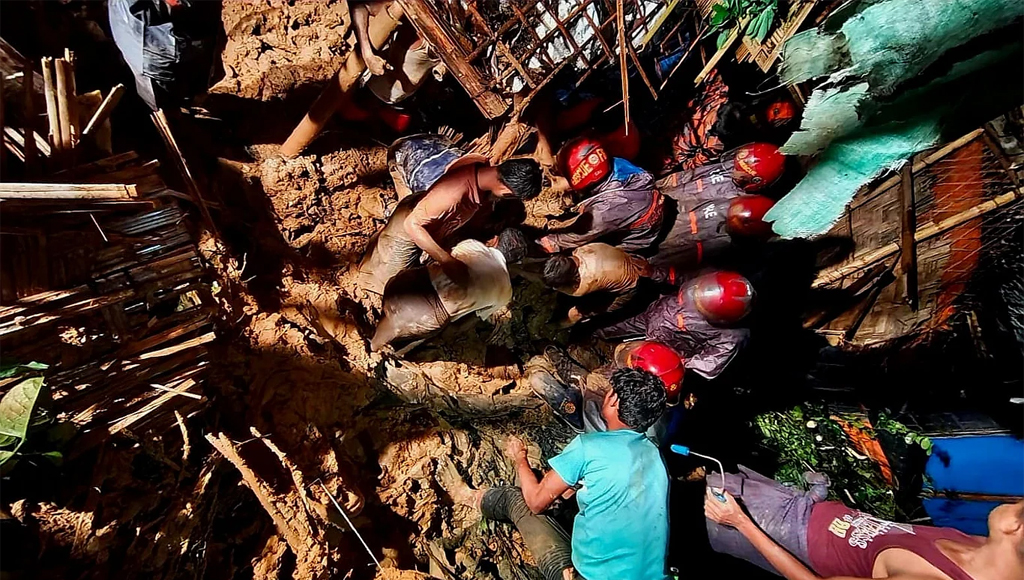
At least 17 Rohingya refugees were killed and thousands displaced by landslides in Bangladesh’s Cox’s Bazar camps in July, prompting Human Rights Watch to call on donor governments, the United Nations and Bangladeshi authorities to urgently fund safer shelters, drainage systems and emergency relocation sites.
Human Rights Watch said on Monday that the deaths were not simply the result of natural disasters, but reflected longstanding policies and funding shortages that have left more than one million Rohingya refugees living in overcrowded, makeshift settlements on steep and deforested hillsides.
“Every monsoon is becoming increasingly deadly for Rohingya refugees in Bangladesh, with denuded hills sliding away under makeshift structures, as the funding to buttress the camps has dried up,” said Meenakshi Ganguly, Deputy Asia Director at Human Rights Watch.
“These are not simply natural disasters but a predictable outcome of policies that put refugees’ lives at risk,” she added.
Thousands Affected by Monsoon Disasters
According to the Rohingya Coordination Platform, 286 weather-related incidents were recorded across the Cox’s Bazar camps between July 4 and July 9.
The incidents affected 26,119 refugees and included 95 landslides that displaced 4,307 people.
At least 2,809 shelters were partially damaged and 13 were destroyed, while learning centres, toilets, water facilities, retaining walls, pathways, stairways, bridges and roads also sustained damage.
Bangladesh authorities have relocated more than 1,000 refugees from high-risk locations, although aid workers said many families were unwilling to leave their shelters because of overcrowding and uncertainty over alternative accommodation.
Overcrowding and Unsafe Camp Design Increase Risks
Bangladesh has hosted more than one million Rohingya refugees for nearly a decade, with families living in tightly packed bamboo-and-tarpaulin shelters across approximately 24 square kilometres of camp land.
The United Nations refugee agency has repeatedly warned that the congested settlements face severe risks from cyclones, flooding and landslides during the annual monsoon season.
A water, sanitation and hygiene engineer interviewed by Human Rights Watch said the camps had been vulnerable from the beginning because hills were cut to create settlements without properly planned drainage systems.
“When the Rohingya first took shelter here, the camps were made by cutting hills and without planned drainage systems,” the engineer said.
“Now, because of funding cuts, sustainable landslide-prevention work, especially brickwork, cannot be done properly, while the Bangladesh government refuses to allow permanent constructions in the camps.”
Human Rights Watch said Bangladesh, the UN and international donors should urgently reduce overcrowding and restore assistance for slope protection, embankments, drainage, access roads and emergency relocation facilities.
Four Family Members Killed in Shelter Collapse
Newly arrived Rohingya refugees face particularly serious risks because many have not been allocated official shelters and are forced to rent, buy or construct unsafe structures in hazardous locations.
A Rohingya man who arrived in Bangladesh in August 2024 told Human Rights Watch that he had repeatedly asked humanitarian organizations for a shelter but was informed that accommodation was not being allocated to new arrivals.
His two daughters and two grandchildren were killed on July 6 when a hillside collapsed onto the makeshift shelter he had built near the edge of a slope.
“I didn’t know the hill would collapse like this,” he said.
More Than 150,000 New Refugees Add Pressure
At least 152,000 Rohingya refugees had arrived in Cox’s Bazar by May following renewed fighting between the Myanmar military and the Arakan Army, which resumed in November 2023, according to Human Rights Watch.
A humanitarian flash appeal for the new arrivals said the original 2025 Joint Response Plan had prepared for approximately 50,000 additional refugees.
With around three times that number now estimated to have arrived, humanitarian agencies say the earlier planning assumptions are no longer adequate.
The Bangladesh government has not yet decided on a UNHCR request for additional land to accommodate the new arrivals, leaving many families crowded into the existing camp area.
One humanitarian worker said government officials remained reluctant to approve new shelters because they did not want refugees to view Bangladesh as a permanent place of residence.
Families Reluctant to Leave Dangerous Shelters
Aid workers said growing demand for accommodation has made refugees fearful that they could lose their shelters if they temporarily relocate during emergencies.
“We repeatedly raise awareness, but we can’t move many people who are at risk,” one humanitarian worker said.
“Just now in Camp 18, I saw that after a landslide, one house had half-collapsed into another house, but we still couldn’t move people.”
Emergency relocation is also complicated by limited space inside the camps.
Temporary relocation sites, including learning centres and facilities used by children, adolescents and women, often lack privacy, sufficient toilets and other essential services.
Aid workers said these conditions discourage vulnerable families, particularly women and children, from leaving high-risk locations.
Safer Shelter Plans Halted by Funding Cuts
In December 2024, the Bangladesh government approved temporary shelters designed to be stronger than existing bamboo-and-tarpaulin structures.
Authorities also approved three semi-permanent shelter models and began considering pilot projects for two-storey shelters to reduce congestion.
A plan to reconstruct 50,000 shelters was also approved, but humanitarian funding cuts announced in January 2025 halted the initiative, Human Rights Watch said.
Some forest officials, local representatives and members of host communities have objected to stronger or semi-permanent shelters, arguing that such construction could encourage permanent settlement and lead to further loss of reserved forest land.
Human Rights Watch said shelter safety should be treated as a human rights and disaster-protection issue rather than as a concession toward permanent settlement.
It called on donors to finance the approved safer shelter models and urged Bangladesh to continue allowing disaster-resistant construction and secure emergency relocation sites.
Major Funding Gaps Threaten Emergency Response
The Shelter and Camp Coordination and Camp Management appeal is only 42 percent funded, with $73.9 million still required, according to Human Rights Watch.
The disaster risk management plan also faces a funding gap of $23.2 million.
The Rohingya Coordination Platform has called for immediate funding for slope stabilization, drainage, watershed management, safer access routes and greater technical capacity to protect refugees and sustain humanitarian operations throughout the monsoon season, which typically continues until October.
“Rohingya refugees won’t benefit from further hand wringing, but by an urgent and effective response,” Ganguly said.
“Concerned governments need to act instead of waiting for the next landslide to sweep away another Rohingya family.”


Over 500 feared dead after two boats reportedly capsize off Myanmar coast: IOM and UNHCR The International Organization for Migration (IOM) and the UN Refugee Agency (UNHCR) have expressed deep […]