Episode: KPN 24-10-2026

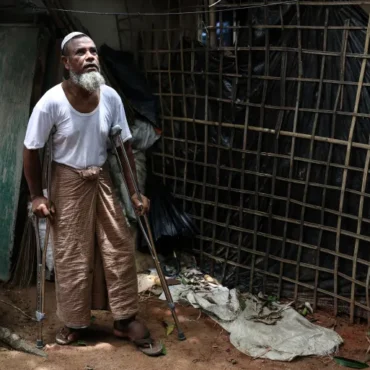
Rohingya camps face shrinking healthcare as funding falls 39% amid population growth Healthcare services in Bangladesh’s Rohingya refugee camps are contracting under a deepening funding shortage even as the refugee […]


 play_arrow
Episode: KPN 25-10-2026 Kaladan Podcast
 play_arrow
Episode: KPN 24-10-2026 Kaladan Podcast
 play_arrow
Episode: KPN 23-10-2026 Kaladan Podcast
 play_arrow
Episode: KPN 22-10-2026 Kaladan Podcast
play_arrow
Episode: KPN 25-10-2026 Kaladan Podcast
The persecution and exclusion faced by Rohingya Muslims in Myanmar cannot be understood solely as a modern phenomenon, but must be examined against centuries of political conquest, colonial-era economic upheaval, ethno-nationalism and anti-Muslim sentiment, according to an analysis by writer and human rights activist Dr. Habib Siddiqui.
In an opinion article titled “The Colonial Fracture: Historical Trajectories of Xenophobia in Myanmar,” published on October 10, Siddiqui argues that the historical foundations of contemporary anti-Rohingya sentiment stretch back well before Myanmar’s independence in 1948.
His analysis identifies the Burmese conquest of Arakan in 1784, British colonial rule, mass migration from British India, economic turmoil during the Great Depression, the rise of exclusionary nationalism in the 1930s and communal violence during World War II as major historical developments that shaped attitudes toward Muslims and people of South Asian ancestry.
1784 conquest of Arakan identified as a turning point
Siddiqui describes King Bodawpaya’s 1784 conquest of Arakan as a pivotal episode in the region’s history.
According to his account, the conquest resulted in enslavement and forced deportation, while large numbers of Muslims and Rakhine Buddhists fled towards Chittagong, which was then under the administration of the British East India Company.
Siddiqui argues that these events form part of a much longer history of displacement and political upheaval affecting the Muslim population of Arakan.
British colonial rule transformed Burma’s economy and demographics
The analysis identifies Britain’s complete conquest of Burma in the 1880s as another major turning point.
After Burma was incorporated into British India, colonial authorities brought administrators and workers from other parts of British India, while South Asian communities became increasingly prominent in administration, finance and urban labour.
Siddiqui particularly highlights the role of Chettiar moneylenders from southern India.
He argues that widespread indebtedness and land dispossession among Burmese farmers contributed to resentment against South Asians, with economic grievances increasingly transformed into broader ethnic hostility.
According to the analysis, distinctions between financiers, colonial administrators, labourers, migrants and long-established Muslim communities became blurred as people perceived to be of South Asian ancestry were increasingly treated as outsiders.
Great Depression intensified ethnic tensions
The global economic crisis of the 1930s further intensified those tensions, Siddiqui writes.
As rice prices collapsed during the Great Depression, indebted Burmese farmers lost land and increasingly migrated to urban areas in search of employment, bringing them into greater competition with established South Asian workers.
Against this economic backdrop, the Dobama Asiayone, or “We-Burmans Association,” emerged as an influential nationalist organisation.
While the movement opposed British colonial rule, Siddiqui argues that some of its right-wing elements increasingly linked Burmese nationalism with ethnic majoritarianism and hostility towards South Asian communities.
He contends that economic grievances were progressively transformed into an exclusionary political narrative portraying people of South Asian ancestry as foreign competitors rather than members of Burma’s diverse society.
U Saw and media-driven nationalism
Siddiqui also examines the role of nationalist politician U Saw and his Burmese-language newspaper Thuriya in shaping anti-Indian and anti-Muslim political sentiment.
According to the analysis, Thuriya became an influential platform for nationalist and anti-immigrant rhetoric, portraying South Asian communities as economic and cultural threats.
Siddiqui connects such rhetoric with the broader political environment surrounding anti-Indian and anti-Muslim violence during the 1930s, particularly the unrest of 1938.
He also points to U Saw’s establishment of the Galon Army, a paramilitary organisation, as an example of the combination of nationalist political mobilisation, media influence and organised intimidation during the period.
Colonial terminology blurred distinct identities
The analysis also raises an important question about historical terminology.
Siddiqui notes that the term “Rohingya” was not widely used in mainstream colonial administrative or political discourse during the 1930s.
Instead, colonial officials and Burmese nationalist movements often used broader categories such as “Bengalis,” “Indians” and the term “Kala” when referring to populations of South Asian ancestry.
He argues that this failure to distinguish between long-established Muslim communities in Arakan and more recent migrants helped create an enduring political framework in which Muslim populations of western Burma could be portrayed collectively as foreigners.
According to Siddiqui, the term “Rohingya” became more prominent in political discourse during the late 1940s and 1950s as Muslim political and intellectual figures in Arakan sought recognition of a distinct identity.
World War II brought catastrophic communal violence
The outbreak of World War II represented an even more destructive stage in this historical trajectory, according to the analysis.
Following the Japanese advance into Burma and the British withdrawal in 1942, communal and political divisions intensified dramatically.
Siddiqui argues that Rohingya Muslims in Arakan were particularly vulnerable because they were perceived by some Burmese nationalist forces as supporters of the British.
His article describes large-scale violence, destruction of Muslim communities and forced displacement in Arakan, with surviving Muslim populations increasingly concentrated in northern areas near the frontier with Chittagong.
At the same time, hundreds of thousands of South Asians fled Burma during the Japanese invasion in an exodus historically known as the “Long March.”
Historical exclusion continues to shape present-day crisis, author argues
Siddiqui concludes that the political rhetoric and exclusionary ideas developed during the colonial and wartime periods did not disappear after Burma gained independence in 1948.
Instead, he argues, the concept of Muslims and people of South Asian ancestry as permanent outsiders became embedded in later political and institutional structures.
From his perspective, understanding the modern Rohingya crisis therefore requires examining how colonial economic inequality, ethnic nationalism, wartime violence and contested definitions of belonging interacted over generations.
The analysis presents these historical developments as part of a continuing trajectory of exclusion rather than isolated episodes.
For the Rohingya, debates over history remain particularly consequential because questions of identity, belonging, citizenship and indigeneity continue to influence their struggle for rights and recognition in Myanmar.

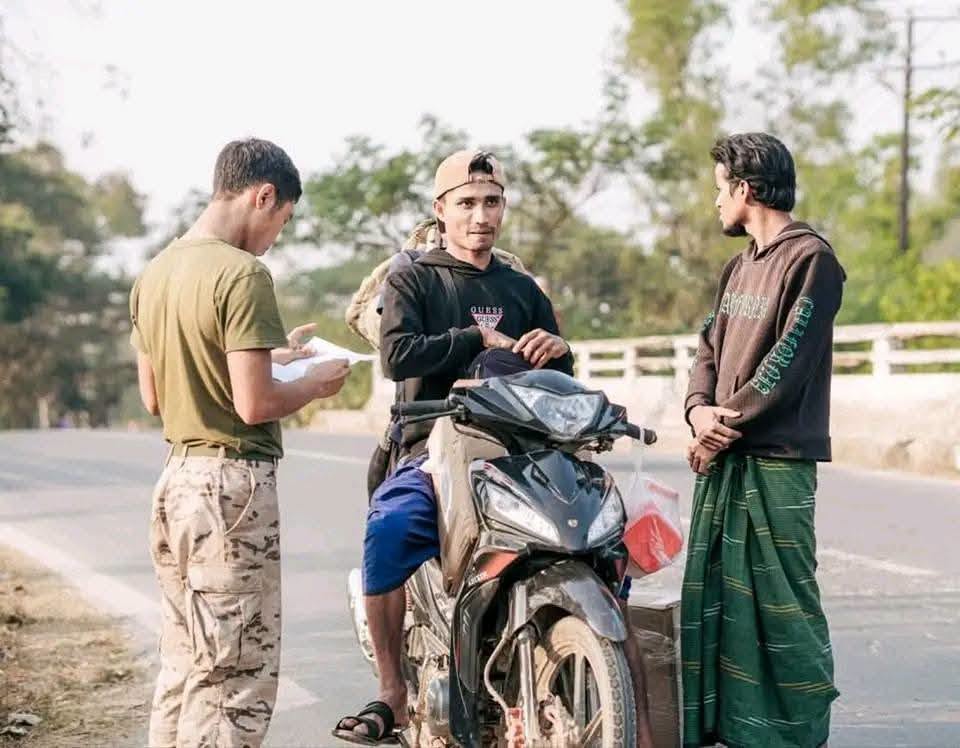

Rohingya camps face shrinking healthcare as funding falls 39% amid population growth Healthcare services in Bangladesh’s Rohingya refugee camps are contracting under a deepening funding shortage even as the refugee […]