
Episode: KPN 21-05-2026

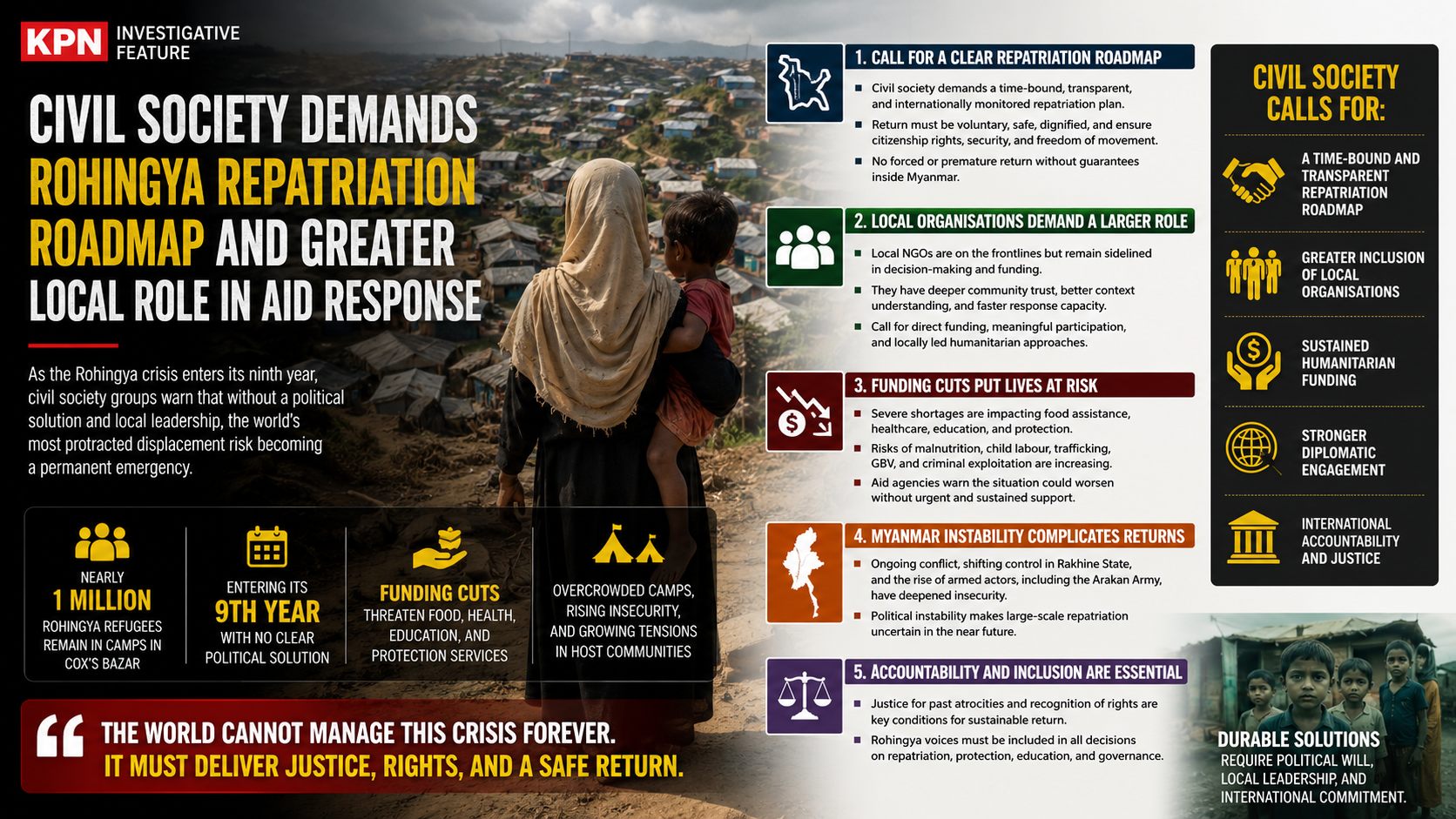
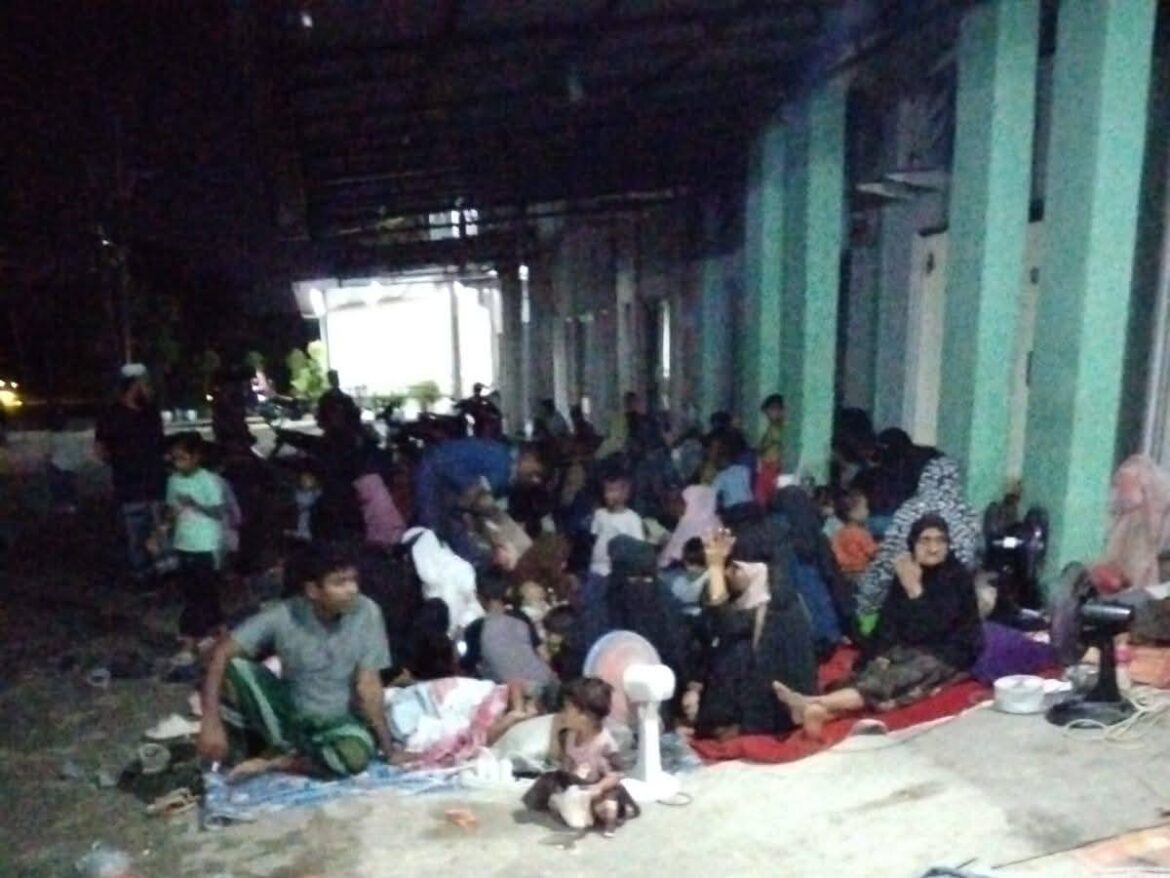
Rohingya rarmers in Kyauktaw allege torture after opposing ULA land seizure Residents say 10 farmers were detained for 72 hours after protesting confiscation of nearly 200 acres of farmland Rohingya […]


 play_arrow
Episode: KPN 30-09-2026 Kaladan Podcast
 play_arrow
Episode: KPN 29-09-2026 Kaladan Podcast
 play_arrow
Episode: KPN 28-09-2026 Kaladan Podcast
 play_arrow
Episode: KPN 27-09-2026 Kaladan Podcast
 play_arrow
Episode: KPN 22-05-2026 Kaladan Podcast
Rights groups urge international community to move beyond prolonged humanitarian management in Cox’s Bazar camps
Civil society organisations working on the Rohingya crisis have called for a clear and time-bound roadmap for the safe and voluntary repatriation of Rohingya refugees to Myanmar, while also demanding a greater role for local organisations in the humanitarian response in Bangladesh.
The call came during discussions among humanitarian actors, rights advocates, and local civil society representatives amid growing concerns over declining international funding, worsening camp conditions, and prolonged uncertainty faced by nearly one million Rohingya refugees living in camps in Cox’s Bazar.
Participants said the absence of a concrete repatriation framework has left the Rohingya population trapped in a protracted humanitarian crisis with limited access to livelihoods, education, and long-term protection.
Demand for Sustainable Repatriation Strategy
Civil society representatives stressed that humanitarian assistance alone cannot provide a permanent solution to the Rohingya crisis and urged stronger diplomatic efforts to ensure the safe, dignified, and voluntary return of refugees to Myanmar.
They emphasized that any repatriation process must guarantee citizenship rights, security, freedom of movement, and access to basic services for Rohingyas upon their return.
Rights groups also warned against forced or premature repatriation attempts without political guarantees and international monitoring mechanisms inside Myanmar.
“The international community must move beyond managing the crisis year after year and focus on achieving durable solutions,” one participant said during the discussion.
Local Organisations Seek Larger Humanitarian Role
Local civil society organisations also called for greater inclusion in humanitarian planning, funding allocation, and camp-level implementation activities.
Representatives argued that locally based organisations possess stronger community networks, better cultural understanding, and long-term field experience that could improve the effectiveness and accountability of aid operations.
They said local groups continue to face limited access to direct funding despite playing a frontline role in emergency response, protection services, education support, and disaster preparedness inside the camps.
Several speakers urged international donors and United Nations agencies to shift toward more locally led humanitarian approaches.
Funding Cuts Raise Concern
The discussions took place against the backdrop of growing financial pressure on humanitarian operations supporting Rohingya refugees in Bangladesh.
Aid agencies have repeatedly warned that funding shortages are affecting food assistance, healthcare services, education programmes, and protection activities in the camps.
Humanitarian officials say the situation could further increase vulnerability among refugees, particularly women and children, while also heightening security and social tensions in the overcrowded camps.
Bangladesh Faces Mounting Pressure
Bangladesh continues to host more than one million Rohingya refugees who fled violence and military operations in Myanmar’s Rakhine State beginning in 2017.
Officials and analysts say the prolonged crisis is placing increasing economic, environmental, and security pressure on host communities in Cox’s Bazar.
Civil society groups urged the international community to maintain humanitarian support for Bangladesh while intensifying diplomatic engagement to address the root causes of displacement in Myanmar.
They also stressed the importance of including Rohingya voices in discussions related to repatriation, protection, and future policy planning.
Calls for International Accountability
Human rights advocates further called for stronger international accountability mechanisms regarding alleged atrocities committed against Rohingyas in Myanmar.
They argued that justice, recognition of rights, and political inclusion remain essential conditions for any sustainable return process.
Observers say uncertainty surrounding Myanmar’s ongoing conflict and political instability continues to complicate prospects for large-scale Rohingya repatriation in the near future.


Rohingya rarmers in Kyauktaw allege torture after opposing ULA land seizure Residents say 10 farmers were detained for 72 hours after protesting confiscation of nearly 200 acres of farmland Rohingya […]


