
Episode: KPN 14-05-2025

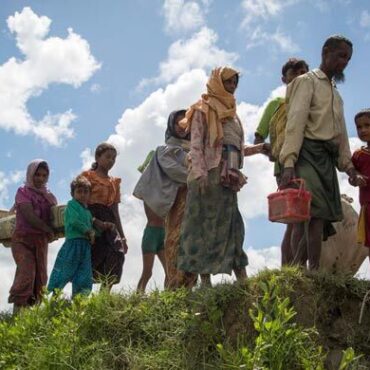
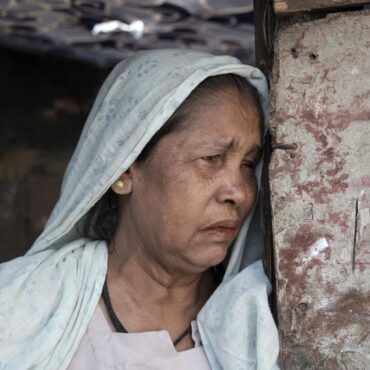
India pushed out Rohingya refugees to intense battlefield, NUG extends protection Jabeda Khatun couldn’t fight back her tears when Maktoob showed a photo of her daughter Anuwara Bagum and her […]


 play_arrow
Episode: KPN 30-09-2026 Kaladan Podcast
 play_arrow
Episode: KPN 29-09-2026 Kaladan Podcast
 play_arrow
Episode: KPN 28-09-2026 Kaladan Podcast
 play_arrow
Episode: KPN 27-09-2026 Kaladan Podcast
 play_arrow
Episode: KPN 15-05-2025 Kaladan Podcast
In a shocking incident, 43 Rohingya refugees—including women, children, the elderly, and the ill—were allegedly thrown into the sea by Indian authorities this week as part of a forced deportation to Myanmar.
The incident came to light on May 8, when a writ petition was filed in the Supreme Court by a group of Rohingya refugees. The petition stated that individuals holding valid United Nations High Commissioner for Refugees (UNHCR) cards were detained under the pretense of biometric verification and subsequently deported—despite the ongoing Supreme Court hearings on Rohingya-related cases.
Among the deportees were cancer patients and other seriously ill individuals. According to reports, the refugees were blindfolded, had their hands tied, and were placed aboard a naval ship. In statements given to The Hindustan Gazette, the deportees alleged they were brutally beaten and falsely accused of being involved in the recent Pahalgam terror attack in Jammu and Kashmir.
“We were flown to Port Blair in the Andaman and Nicobar Islands on a military aircraft,” the victims stated. “From there, we were transferred to naval ships, tied up and blindfolded for the entire journey. We were tortured, interrogated, and accused of being terrorists. When we denied the allegations, they said we were pretending.”
Women among the group reported facing sexual harassment and other forms of abuse. According to the statement, the group was later thrown into international waters near the Thailand-Myanmar border. “A navy officer told us someone would rescue us, but no one came. Before being deported, we were asked whether we preferred to go to Myanmar or Indonesia. We chose Indonesia. But when we arrived, we realized we were in Myanmar.”
Mohammed Sadiq, a Rohingya activist closely involved in the case, said that several members of his family—including his brother, sister-in-law, cousins, and maternal uncle—were among those deported.
“The way they were picked up and deported is inhumane and unacceptable,” Sadiq said. “It is a gross violation of international human rights and India’s constitution.”
According to Rohingya activist John (Name changed), the deportees were detained by local police from the Dwarka, Hastasal, and Vikaspuri areas of Delhi. On May 6, police reportedly summoned them to stations under the pretense of correcting biometric errors. Those unreachable by phone were visited at home and ordered to report in person.
At the Dwarka Dossier Cell, victims were allegedly surrounded by around 15 personnel, some armed. They were closely monitored—even during bathroom breaks—and later taken to the airport. Men were inspected for scars and identifying marks, while women were forced to undergo pregnancy tests. The group was then transferred to another holding facility in Rajouri (Inderlok), where further detainees were being kept.
“There, they were told their fingerprints would be retaken,” the statement continued. “Many also reported physical abuse. That same morning, over a dozen officers conducted searches in Vikaspuri, detaining three Christian Rohingya and cutting off their communication by switching off their phones.”
Sadiq said there is still no information about the current condition or whereabouts of the deportees. “We don’t know if they were killed, trafficked, or are still in Myanmar. We are praying for their safety.”
In the Supreme Court petition, the refugees requested a declaration that such “forced and clandestine” deportations are unconstitutional. They also sought a directive to the Government of India to repatriate the deportees and release them from custody.
Furthermore, the petition urged the government to stop detaining UNHCR card-holding Rohingyas, to treat them with dignity and respect, and to safeguard their human rights. The petitioners also demanded ₹50 lakh in compensation for each deportee and the resumption of residency permits for UNHCR cardholders under India’s Domestic Refugee Policy.



India pushed out Rohingya refugees to intense battlefield, NUG extends protection Jabeda Khatun couldn’t fight back her tears when Maktoob showed a photo of her daughter Anuwara Bagum and her […]