

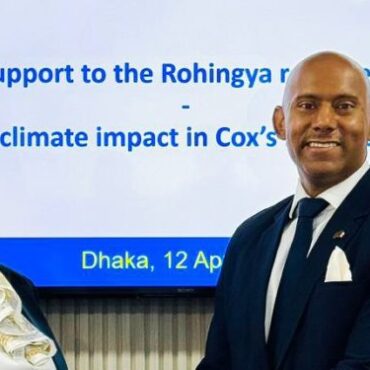
Episode: KPN 14-04-2026

Canada supports Rohingya response with CAD 10 million for environmental protection and clean cooking fuel Canada announced today a CAD 10 million contribution to provide clean, safe and sustainable cooking […]


 play_arrow
Episode: KPN 30-09-2026 Kaladan Podcast
 play_arrow
Episode: KPN 29-09-2026 Kaladan Podcast
 play_arrow
Episode: KPN 28-09-2026 Kaladan Podcast
 play_arrow
Episode: KPN 27-09-2026 Kaladan Podcast
 play_arrow
Episode: KPN 15-04-2026 Kaladan Podcast
The Arakan Army (AA) has introduced new restrictions on cattle trading in Maungdaw District, requiring residents to obtain official approval and pay taxes for all transactions, according to local sources.
Residents report that under directives issued by the AA and its political wing, the United League of Arakan (ULA), the buying and selling of cattle without prior authorization from ward or village administrators is now prohibited. Violations of the order may result in the confiscation of livestock and punitive action against those involved.
The announcement, reportedly circulated in southern Maungdaw villages around 8 p.m. on the previous day, outlines strict enforcement measures. Traders must secure approval from relevant local administrators and pay designated taxes before conducting any cattle transactions. Failure to comply will lead to the seizure of cattle, with both sellers and buyers subject to penalties. In cases where the original owner cannot be identified, authorities indicated that action will be taken against the buyer.
Local residents expressed concern over the timing of the directive, noting that it coincides with the approach of the Qurbani festival, a period when cattle trading typically increases. A resident from Buthidaung explained that it has long been common practice for individuals to purchase cattle at lower prices ahead of the festival and resell them afterward. Some animals are also specifically bought for ritual sacrifice during Qurbani.
“Previously, there was no taxation on such transactions,” the resident said. “Now, we are being told that taxes must be paid to the AA/ULA, and failure to do so could result in losing the cattle.”
Residents further noted that under the previous administration of the military council, taxation was generally limited to formal cattle markets. In contrast, the new policy reportedly applies to all cattle sales, regardless of location.
The AA has not publicly detailed the tax rates or enforcement mechanisms, but locals say the measures are already being implemented across parts of Maungdaw District.


Canada supports Rohingya response with CAD 10 million for environmental protection and clean cooking fuel Canada announced today a CAD 10 million contribution to provide clean, safe and sustainable cooking […]


