

Episode: KPN 02-09-2026

Nine years after 2017 crackdown, Rohingya still await justice as new atrocities emerge: SAC-M Nine years after Myanmar’s military launched its 2017 crackdown against the Rohingya in northern Rakhine State, […]


 play_arrow
Episode: KPN 31-10-2026 Kaladan Podcast
 play_arrow
Episode: KPN 30-10-2026 Kaladan Podcast
 play_arrow
Episode: KPN 29-10-2026 Kaladan Podcast
 play_arrow
Episode: KPN 28-10-2026 Kaladan Podcast
 play_arrow
Episode: KPN 03-09-2026 Kaladan Podcast
For nearly a decade, governments, international organisations, humanitarian agencies and experts have debated the future of the Rohingya — discussing repatriation, protection, education, livelihoods and long-term solutions. Yet Rohingya voices have too often been missing from the very spaces where decisions affecting their lives and futures are made.
This exclusion is not a minor procedural oversight. It undermines both the legitimacy and effectiveness of initiatives intended to address one of the world’s most protracted displacement crises.
The principle should be simple: nothing about us, without us.
A pattern of exclusion
Over the past nine years, countless programmes, conferences, meetings and webinars have been organised to discuss Rohingya issues.
Topics have ranged from repatriation and humanitarian protection to education, livelihoods and the future of Rohingya refugees.
Yet many of these discussions have taken place without meaningful Rohingya representation.
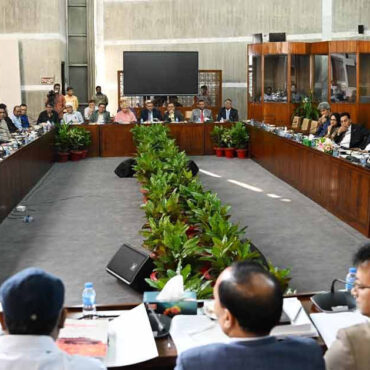
Even when Rohingya representatives are invited, their participation can sometimes be reduced to a symbolic appearance rather than genuine involvement in decision-making.
Giving a Rohingya representative five or ten minutes on an agenda cannot, by itself, constitute meaningful participation. Consultation has little value if those being consulted have no real opportunity to influence the decisions that follow.
Too often, such arrangements allow institutions to say that the affected community was consulted without giving that community substantive influence over policy, programme design or outcomes.
Experts speak about Rohingya, but Rohingya must speak for themselves
International discussions on the Rohingya crisis frequently feature diplomats, academics, humanitarian officials, researchers and other external experts.
Their expertise can make an important contribution. But external expertise cannot substitute for the lived experience of Rohingya themselves.
Many people speaking about the future of the Rohingya have never experienced statelessness, forced displacement or prolonged life in a refugee camp.
Rohingya people, by contrast, live with the consequences of these realities every day.
No one understands more directly the conditions facing Rohingya refugees, the barriers confronting displaced families or their aspirations for the future than the communities experiencing them.
Lived experience should therefore not be treated as a lesser form of knowledge.
When policies concern the survival, rights and future of a community, lived experience is an essential form of expertise.
‘Nothing about us, without us’ must be more than a slogan
For the Rohingya, “nothing about us, without us” is more than a slogan. It is a demand for dignity, agency and self-determination.
Meaningful participation requires more than simply inviting Rohingya representatives into a meeting room.
It means ensuring they have a seat at the table when priorities are established, programmes are designed and decisions are made.
It also means recognising Rohingya organisations and representatives as partners rather than treating the community merely as passive recipients of humanitarian assistance or policies designed by others.
Participation must begin before decisions are made — not after policies have already been drafted.
Rohingya participation is essential to repatriation
Nowhere is this principle more important than in discussions about repatriation.
Rohingya refugees themselves would bear the consequences of any return to Myanmar. They would have to live under the political, security and social conditions created by a repatriation agreement.
Their citizenship, freedom of movement, physical security, property rights, access to education and livelihoods, and ability to return to their original communities would all directly affect whether return could be sustainable.
A repatriation framework developed without meaningful Rohingya participation therefore starts from an incomplete foundation.
The people expected to return must have a substantive role in determining what conditions would make their return safe, voluntary, dignified and sustainable.
Without that participation, policymakers risk designing solutions that fail to reflect realities experienced by the very people those policies are supposed to serve.
From symbolic consultation to genuine partnership
Governments, United Nations agencies, humanitarian organisations, donors and other institutions working on the Rohingya crisis should move beyond symbolic inclusion.
Rohingya representatives should be involved from the beginning of programme and policy development — including needs assessments, planning, implementation, monitoring and evaluation.
This requires creating mechanisms through which diverse Rohingya voices can participate, including refugees, women, youth, educators, community leaders, civil society representatives and people with direct experience of displacement.
Participation should also be substantive rather than ceremonial.
Rohingya representatives must have sufficient time and opportunity to present their positions, challenge proposals and influence outcomes.
Nine years of exclusion is too long
Excluding Rohingya voices sends a damaging message: that others can decide what is best for the community without meaningfully involving the people whose lives will be affected.
That approach must change.
If the international community is serious about finding a sustainable solution to the Rohingya crisis, it must recognise Rohingya people not simply as victims or beneficiaries but as stakeholders with knowledge, agency and rights.
Our voices cannot be an afterthought.
We must be part of the starting point.
About the author: Khin Maung is President and a Panel Member of the United Council of Rohingya (UCR) and a member of the Management Committee of the Examination Board of Rohingya Refugees (EBRR).
The views expressed in this commentary are those of the author and do not necessarily represent the editorial position of Kaladan Press Network.
By Khin Maung
President and Panel Member, United Council of Rohingya (UCR); Management Committee Member, Examination Board of Rohingya Refugees (EBRR)

Nine years after 2017 crackdown, Rohingya still await justice as new atrocities emerge: SAC-M Nine years after Myanmar’s military launched its 2017 crackdown against the Rohingya in northern Rakhine State, […]