

search menu
play_arrow

keyboard_arrow_right

skip_previous play_arrow skip_next
00:00 00:00
playlist_play chevron_left
volume_up
chevron_left
play_arrow

October 2026

Episode: KPN 30-10-2026

Kaladan Podcast October 30, 2026


Background
share close

Loading

Myanmar conflict death toll surpasses 100,000 as UN warns of deepening civilian crisis

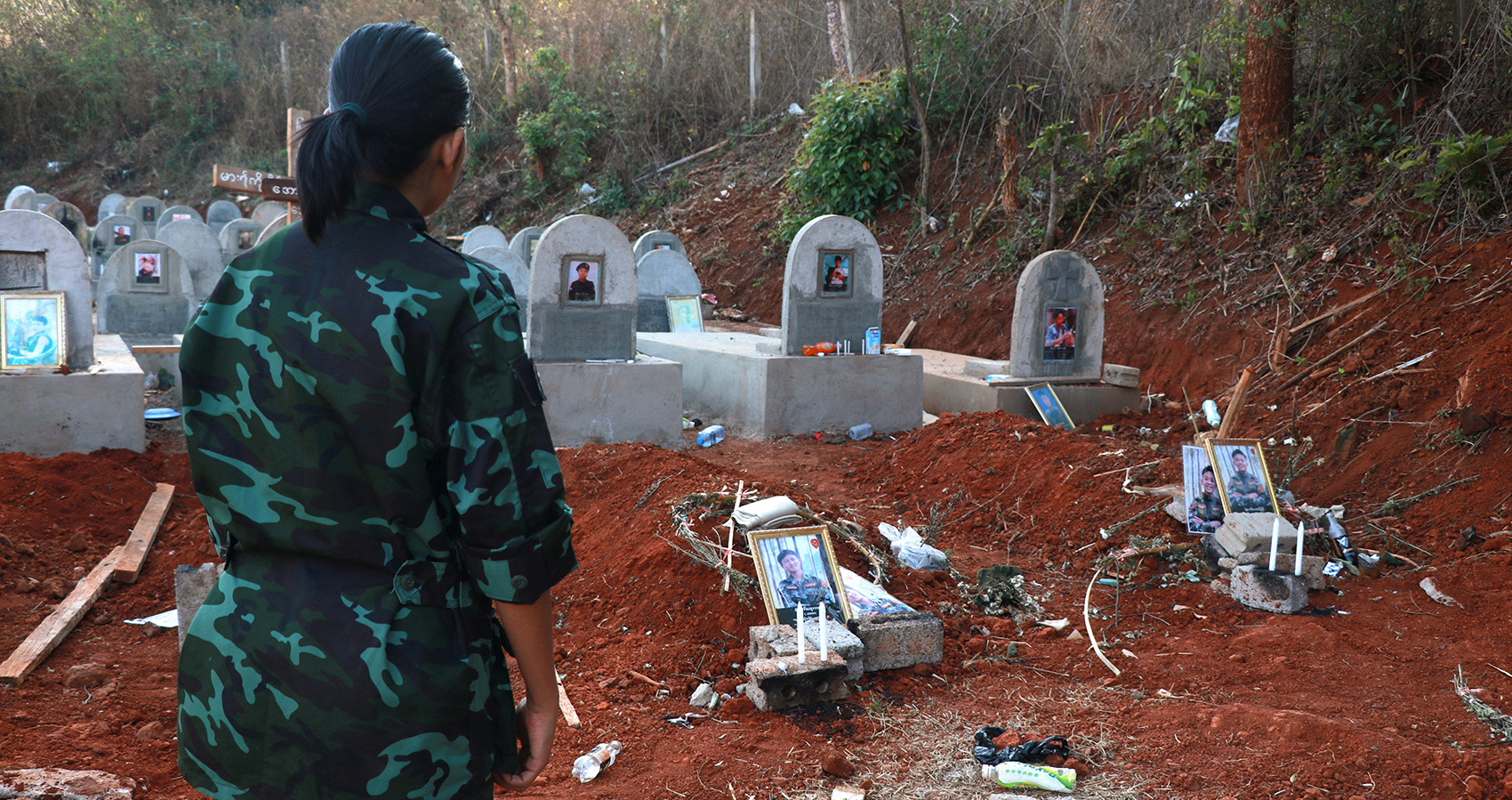
More than 100,000 people have been killed in conflict-related violence in Myanmar since the February 2021 military coup, with civilians accounting for the vast majority of the deaths, United Nations experts have warned as military airstrikes and alleged human rights violations continue across the country.

During discussions at the UN General Assembly’s Third Committee, UN officials painted a worsening picture of Myanmar more than five years after the military seized power, highlighting attacks on civilians, alleged war crimes and crimes against humanity, displacement and the continuing plight of the Rohingya.

The crisis remains particularly severe in Arakan State, where renewed armed conflict has created further risks for Rohingya and other communities.

Myanmar Death Toll Passes 100,000

Kelley Anne Eckels-Currie, UN Special Rapporteur on the situation of human rights in Myanmar, said the country had crossed what she described as a “grim milestone” of more than 100,000 conflict-related deaths since the coup.

She said the vast majority of those killed were civilians.

The Special Rapporteur accused Myanmar’s military authorities of continuing attacks against civilians while the country’s formal economy deteriorates and illicit activities, including online scams, trafficking and resource extraction, expand.

She described the military authorities as the primary source of civilian deaths, suffering and instability in Myanmar.

Military authorities, however, reject such assessments and maintain that their security operations target armed groups they designate as terrorists.

UN Warns of Intensifying Airstrikes on Civilians

Nicholas Koumjian, head of the Independent Investigative Mechanism for Myanmar (IIMM), told the committee that the human rights situation had deteriorated further, with increasing numbers of people becoming victims of alleged war crimes and crimes against humanity.

The IIMM is investigating indiscriminate or targeted attacks allegedly affecting civilians in homes, hospitals, displacement camps and schools.

Investigators are examining attacks involving aircraft as well as drones and paramotors.

Koumjian cited recent attacks on a monastery in Sagaing Region and a church complex in Chin State.

He also referred to an airstrike on a market in Arakan State that reportedly killed more than 50 people.

The Mechanism is additionally investigating allegations of torture and abuse at military-run detention facilities.

Witnesses have provided investigators with accounts of sexual and gender-based violence, torture and other serious abuses, according to Koumjian.

Rohingya Remain Trapped in Arakan Conflict

The Rohingya crisis featured prominently in the UN discussions.

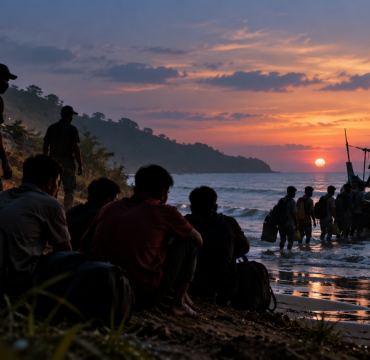
Julie Bishop, the UN Secretary-General’s Special Envoy on Myanmar, said that despite competing narratives surrounding Myanmar’s conflict, one reality was indisputable: Rohingya have continued fleeing Arakan State in search of protection in Bangladesh and elsewhere.

Bangladesh currently reports hosting around 1.3 million Rohingya from Myanmar.

For Rohingya who remain inside Arakan State, the situation remains dangerous.

According to the UN Special Envoy, people remaining in areas affected by the conflict face armed violence, landmines and forced recruitment.

The Arakan Army (AA) currently controls 14 of Arakan State’s 17 townships, according to the information presented to the committee.

The Myanmar authorities say they are committed to facilitating the return of approximately 326,000 verified former residents.

Bishop, however, warned that conditions for the safe, voluntary, dignified and sustainable return of Rohingya refugees do not currently exist.

She cautioned against refugee repatriation under present conditions.

Rohingya Refugees Continue to Seek Justice

Koumjian said approximately 1.2 million Rohingya have fled to Bangladesh.

During meetings with refugees, he heard accounts illustrating the continuing human cost of violence in Arakan State.

He recalled meeting a Rohingya father whose five children had been killed in Arakan and a woman whose husband disappeared after allegedly being abducted by the Arakan Army.

“Everyone I met carried pain from their experiences,” Koumjian said.

According to the IIMM, many refugees expressed hope that accountability for crimes committed against them would contribute to conditions allowing their eventual safe return to Myanmar.

The Mechanism has gathered videos, geospatial imagery and financial records from more than 1,600 sources, together with more than 750 witness testimonies.

It has also shared information supporting proceedings before international courts and preliminary investigations conducted by several countries.

Bangladesh Warns Displacement Cannot Become Permanent

Bangladesh also raised concerns about the continuing Rohingya crisis during the UN discussion.

Its representative warned of sexual violence and forced recruitment in Arakan State and stressed that prolonged displacement of the Rohingya cannot become a permanent solution.

Bangladesh called for predictable international funding and greater burden-sharing as it continues hosting a large refugee population from Myanmar.

The comments come as international humanitarian assistance for Rohingya refugees remains under pressure while prospects for safe repatriation remain uncertain.

Myanmar Military and Resistance Present Competing Narratives

UN Special Envoy Julie Bishop said Myanmar’s political and military crisis continues to be characterised by sharply competing accounts.

Myanmar’s military authorities maintain that the November 2020 general election, overwhelmingly won by the National League for Democracy (NLD), was fraudulent and that military intervention was necessary.

Opponents of military rule reject that claim and maintain that the election represented the legitimate will of Myanmar voters.

The military also says its aerial operations target armed groups it describes as terrorists, while resistance organisations accuse the military of deliberately or indiscriminately attacking civilians, including women and children.

Bishop questioned how long the international community could allow the crisis to continue without effective action.

Calls Grow for Accountability and End to Violence

Myanmar’s representative at the UN condemned military airstrikes, forced conscription and the continued detention of former State Counsellor Aung San Suu Kyi.

He called on governments to stop supplying the military with jet fuel, weapons and financial resources.

Japan called for an end to attacks against civilians and the release of political detainees, while the European Union rejected the legitimacy of the military authorities’ electoral process and warned that presenting military rule under a nominally civilian administration would not provide democratic legitimacy.

Russia and China, however, challenged aspects of the UN experts’ assessments.

Russia described the reporting as seriously imbalanced and rejected efforts to place primary responsibility for the crisis on authorities in Naypyidaw.

China also disputed the Special Rapporteur’s conclusions and urged the international community to focus on bridging differences rather than increasing tensions.

UN Says Myanmar Crisis Continues to Deepen

More than five years after the February 2021 military takeover, Myanmar remains engulfed in armed conflict, mass displacement and a deepening humanitarian crisis.

The situation in Arakan State remains particularly complex as the Arakan Army controls most townships while Rohingya and other civilians continue to face insecurity associated with armed conflict.

UN officials have called for an immediate reduction in violence, greater humanitarian access, protection of civilians and accountability for serious international crimes.

For Rohingya refugees in Bangladesh, however, the central question remains unresolved: when conditions inside Myanmar will allow them to return home voluntarily, safely and with dignity.

Tagged as: , , , , , , , , , , , , , , , , , , , , , , , , , , , , , , , , , , , , , , , , , .

Download now: Episode: KPN 30-10-2026

file_download Download

Rate it
Previous episode