

Episode: KPN 02-02-2025

HRCL reports on Rohingya asylum seekers The Human Rights Commission of Sri Lanka (HRCSL), on Friday (31), called for urgent measures to address the conditions of 116 Rohingya asylum seekers, […]


 play_arrow
Episode: KPN 30-09-2026 Kaladan Podcast
 play_arrow
Episode: KPN 29-09-2026 Kaladan Podcast
 play_arrow
Episode: KPN 28-09-2026 Kaladan Podcast
 play_arrow
Episode: KPN 27-09-2026 Kaladan Podcast
 play_arrow
Episode: KPN 03-02-2025 Kaladan Podcast
Malaysian restaurant groups are urging the government to allow them to hire Rohingya refugees and recent migrants from India, with a ban on new foreign workers leaving as many as 25,000 food service roles unfilled even as many locals shun these jobs that are seen as lowly paid.
For decades, Malaysia has relied on foreign workers – mainly from Bangladesh, Indonesia and Myanmar – to staff its farms, factories, construction sites and service industries.
In April last year, the government stopped businesses from hiring new migrant workers to reduce the country’s dependence on foreign labour and create more jobs for Malaysians.
The ban followed a major corruption and debt bondage scandal inside the Bangladeshi workforce supply chain involving syndicates filling job quotas in Malaysia.
With 2.47 million documented foreign workers as of December, their proportion compared with Malaysia’s total workforce hit the 15 per cent cap that month, according to the government.
The ban on new foreign workers has left huge shortages in the food service sector even though the ranks of unemployed remain relatively high. The number of unemployed in Malaysia fell from 551,400 in October to 546,000 in November.
There are 25,000 unfilled restaurant positions nationwide, according to the Malaysian Muslim Restaurant Owners Association (Presma) and the Malaysian Indian Restaurant Owners Association (Primas).
Many restaurants have been operating with fewer employees, resulting in longer waits and a drop in cleanliness standards, with some having to reduce their operating hours to fix the staffing crisis.
“If the government allows it, we are ready to employ Rohingya refugees who have proper documentation. However, there is currently no clear policy on their employment status,” Presma President Jawahir Ali Taib Khan said on Saturday.
His organisation represents over 12,000 mamak restaurants in Malaysia, which serve cheap and popular local dishes and are generally open 24 hours.
Malaysians would typically avoid such jobs in these restaurants despite the perks of workplace meals, dormitory facilities and competitive wages, Jawahir said.
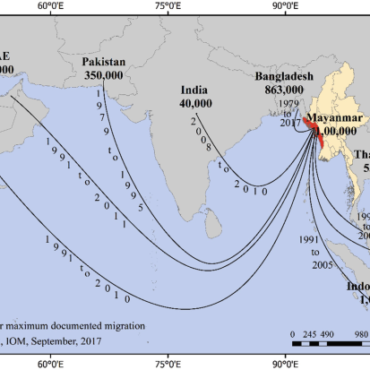
The Rohingya, a stateless Muslim minority persecuted in Myanmar, comprise 60 per cent of the 192,000 refugees and asylum seekers registered with the UNHCR in Malaysia. But the number is likely an underestimate, with many having fled Myanmar, refugee camps in Bangladesh and Thailand to Malaysia.
Jawahir has urged the government to raise the age cap for migrant workers from 45 to 60, saying many older employees are still capable and willing to work.
Malaysian Indian business owners echoed the call, saying the migrant freeze had also led to severe staffing gaps elsewhere in textile shops, goldsmiths, barber shops, and recycling firms.
“Industries owned by Malaysian Indians also need the help and support of foreign workers, especially from India,” said Ganesan Shonmugam, a community leader from Sitiawan, in Perak state.
A huge wave of migrant workers arrived in Malaysia in the late 1980s, fuelled by its booming economy, while many Malaysians pursued better-paying office jobs.
Deputy Prime Minister Ahmad Zahid Hamidi said on Friday that the government was aware of the issue and was reviewing the requests by various industries to relax the rules on foreign worker hiring.
“I hope this issue will be reconsidered as they are facing a shortage of workers and assistants in restaurants. I expect a resolution soon,” Ahmad Zahid said.
However, such a potential move has been criticised by some online users, who expressed concerns over public safety and hygiene if Rohingya refugees were allowed to work in Malaysia.
Facebook user Azman Rahim said: “This will only encourage more Rohingya to come to Malaysia … Soon, we’ll have even more refugees to take care of.”


HRCL reports on Rohingya asylum seekers The Human Rights Commission of Sri Lanka (HRCSL), on Friday (31), called for urgent measures to address the conditions of 116 Rohingya asylum seekers, […]


