

Episode: KPN 10-08-2026

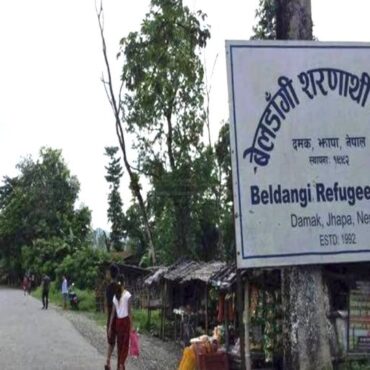
Nepal police say 526 Rohingya entered through open India border Nepal Police say 526 Rohingya refugees are currently living in the country after entering at different times through the open […]


 play_arrow
Episode: KPN 30-09-2026 Kaladan Podcast
 play_arrow
Episode: KPN 29-09-2026 Kaladan Podcast
 play_arrow
Episode: KPN 28-09-2026 Kaladan Podcast
 play_arrow
Episode: KPN 27-09-2026 Kaladan Podcast
 play_arrow
Episode: KPN 11-08-2026 Kaladan Podcast
More than 100 Rohingya refugees were forced to leave their homes in Kuala Muda, Penang, after local residents displayed signs telling Rohingya to leave the village, as a wider wave of anti-Rohingya rhetoric and hostile content spread across Malaysian social media, according to reports cited by France 24.
The displacement on July 27 came amid growing concern over the safety of Rohingya refugees in Malaysia, where at least nine community schools serving refugee children have temporarily suspended operations following reported harassment and heightened hostility.
The latest incidents have raised concerns among refugee advocates over the consequences of misinformation and anti-refugee rhetoric for a community that lacks formal legal protection in Malaysia.
Signs Tell Rohingya to Leave Kuala Muda
In Kuala Muda, residents reportedly erected signs declaring that Rohingya were not allowed in the village.
Malaysian newspaper Sinar Harian reported that the Rohingya population in the village had increased from 108 people in 2018 to around 400 in 2026.
More than 100 refugees subsequently left the area.
Families leaving Kuala Muda were reportedly escorted to buses travelling to Kuala Lumpur, where they sought assistance from the UN refugee agency, UNHCR.
Some set up tents near the UNHCR office after reaching the Malaysian capital.
Police later detained the group for one day while checking their documents and status, after which they were placed under the care of local nongovernmental organisations, according to the account.
Online Disinformation Fuels Anti-Rohingya Sentiment
The Kuala Muda incident occurred against the backdrop of what rights advocates describe as a sustained increase in anti-Rohingya rhetoric.
A representative of freedom-of-expression organisation Article 19, whose identity was withheld for security reasons, said the latest wave began in late April and had developed into one of the most widespread and prolonged periods of anti-Rohingya rhetoric.
According to the representative, the hostility was preceded by a disinformation campaign alleging that Rohingya refugees were demanding land and special rights in Malaysia.
An online petition calling on the Malaysian prime minister to deport Rohingya appeared in May.
UNHCR, Malaysia’s Human Rights Commission, known as SUHAKAM, and nongovernmental organisations working with refugees also reportedly received threats through social media.
The claims circulating online about Rohingya demands for land and special privileges have been described as misinformation by refugee-rights advocates.
Refugee Children Face Harassment
The growing hostility has also affected Rohingya children and their access to education.
According to the founder of an organisation working on refugee education, children have faced harassment and bullying while travelling to school.
A Rohingya teacher and community activist in Kuala Lumpur said one community school had remained closed for about a month, while another suspended classes for approximately two weeks.
When lessons resumed, students were reportedly advised not to wear school uniforms while travelling in order to avoid drawing attention to themselves.
At least nine community schools for refugee children temporarily suspended operations amid the heightened tensions, according to France 24.
The disruption is particularly significant because refugee children in Malaysia depend heavily on community-run and NGO-supported learning centres for education.
Malaysia Hosts 126,000 Registered Rohingya
Malaysia is one of the largest destinations for Rohingya outside Bangladesh.
According to UNHCR figures cited in the source material, 126,000 Rohingya were registered in Malaysia as of late February 2026, out of approximately 215,600 registered refugees and asylum seekers in the country.
Malaysia is not a party to the 1951 Refugee Convention.
As a result, refugees and asylum seekers registered with UNHCR do not receive the same formal legal status and protections available under domestic refugee legislation in countries that recognise such status.
Their lack of formal employment rights also leaves many refugees dependent on informal work and vulnerable to exploitation.
Conflicting Signals Over Possible Returns to Myanmar
Uncertainty over Malaysia’s approach to Myanmar nationals intensified in late July.
On July 23, Malaysia’s deputy foreign minister told Parliament that 5,000 Myanmar nationals held in immigration detention centres would be repatriated to Myanmar.
Prime Minister Anwar Ibrahim then said on July 30 that Myanmar had agreed to receive 5,000 Rohingya asylum seekers from Malaysia, according to the source material.
The announcement generated concern because Rohingya continue to face insecurity and persecution in Myanmar, while renewed conflict has displaced additional communities in Rakhine State.
On August 5, however, Communications Minister Fahmi Fadzil said the Malaysian government would not deport refugees who faced persecution.
The statements have left questions over precisely who could be returned, what safeguards would apply and how Malaysian authorities would determine whether a person faces persecution.
Rohingya Again Face Uncertainty Away From Home
For Rohingya refugees, the hostility in Malaysia represents another layer of insecurity after decades of persecution and displacement from Myanmar.
Many Rohingya have reached Malaysia after dangerous journeys by land and sea, hoping to find safety and livelihood opportunities.
But without recognised refugee status under Malaysian law, they remain vulnerable to detention, exploitation and changes in immigration enforcement.
The events in Kuala Muda demonstrate how rapidly online misinformation and hostility can translate into consequences for refugees on the ground — from families leaving their homes to children being unable to attend school safely.
For Rohingya community members and refugee-rights advocates, preventing further escalation will require authorities to counter misinformation, protect refugees and local communities from violence and intimidation, and provide clear information about Malaysia’s policies toward Rohingya and other people seeking protection.


Nepal police say 526 Rohingya entered through open India border Nepal Police say 526 Rohingya refugees are currently living in the country after entering at different times through the open […]


