
Episode: KPN 29-01-2025

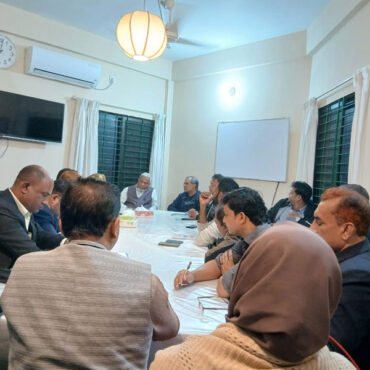
Unified efforts, sustainable repatriation urged to resolve Rohingya crisis A significant meeting involving 42 NGO representatives under the CSO-NGO Coordination and Cooperation Network (CCNF) was held at the COAST Cox’s […]


 play_arrow
Episode: KPN 31-10-2026 Kaladan Podcast
 play_arrow
Episode: KPN 30-10-2026 Kaladan Podcast
 play_arrow
Episode: KPN 29-10-2026 Kaladan Podcast
 play_arrow
Episode: KPN 28-10-2026 Kaladan Podcast
 play_arrow
Episode: KPN 30-01-2025 Kaladan Podcast
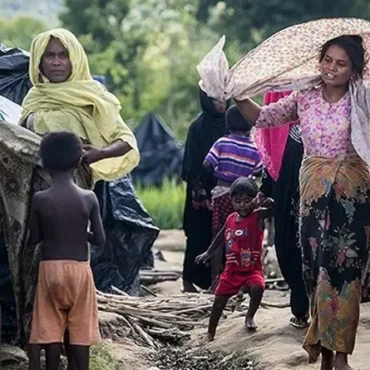
Authorities have launched an eviction operation to clear newly established Rohingya settlements from the hills due to safety and environmental concerns.
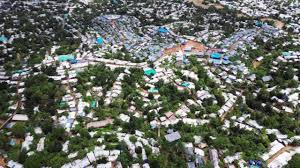
The authorities have started relocating Rohingya settlements that have recently sprung up on deforested hills in Teknaf, Cox’s Bazar.
On Wednesday, a joint operation was conducted from noon to the afternoon in the hilly area of Jadimura, Hnila Union, led by the 16th Armed Police Battalion (APBn) and local police.
The operation was headed by Khanzada Shahriar Bin Mannan, senior assistant secretary and in-charge of the APBn camp in Teknaf.
Mentioning that around 50 hazardous settlements in the hills will be evicted, the APBn camp in-charge said: “Newly arrived Rohingya refugees have built shelters in highly dangerous areas of the hills. There is a risk of landslides during the rainy season. Considering the risk, we are conducting this eviction operation. With the cooperation of local representatives, these Rohingya will be sent back to the camps.”
He further said: “A suitable place for their resettlement will be arranged soon. This operation will not be completed in one day, but all hazardous settlements will be removed.”
Regarding this, Hnila Union Parishad (UP) member Mohammad Ali said: “A large portion of this vast hilly area is occupied by Rohingya settlements. Since it is highly risky, police and other authorities are conducting an operation in coordination with the Rohingya through discussions to remove the unsafe shelters. As they were given refuge here on humanitarian grounds, they are homeless people. Alternative arrangements will be made for their relocation.”
Mohammad Harun, a Rohingya refugee from Myanmar’s Boli Bazar village, who has been living in an elevated hilly area, expressed his distress, saying: “Five months ago, we fled Rakhine to save our lives and came to Bangladesh with our family. After moving from one camp to another without finding space, we took shelter here. But now, we are being removed from here too. Where will we go now?”
Previously, in 2017, when Rohingya refugees fled from Myanmar, vast portions of forests and hills in Ukhiya and Teknaf, Cox’s Bazar, were cleared to accommodate them.
According to the Forest Department, nearly 9,000 acres of hills have been deforested for Rohingya settlements in these two upazilas.
While the government is trying to repatriate the Rohingya, the new settlements in Teknaf—by cutting down hills—pose a threat to the environment and have sparked anger among local residents.


Unified efforts, sustainable repatriation urged to resolve Rohingya crisis A significant meeting involving 42 NGO representatives under the CSO-NGO Coordination and Cooperation Network (CCNF) was held at the COAST Cox’s […]