Episode: KPN 21-09-2025

WB to give $700m for 2 Rohingya projects The World Bank yesterday launched two new projects worth $700 million to improve basic services, strengthen disaster resilience and expand human capital […]


 play_arrow
Episode: KPN 31-10-2026 Kaladan Podcast
 play_arrow
Episode: KPN 30-10-2026 Kaladan Podcast
 play_arrow
Episode: KPN 29-10-2026 Kaladan Podcast
 play_arrow
Episode: KPN 28-10-2026 Kaladan Podcast
 play_arrow
Episode: KPN 22-09-2025 Kaladan Podcast
Journalists, diplomats, and security analysts gathered in Dhaka on Saturday and called on the media to highlight the Rohingya refugee crisis from new perspectives, including the repatriation stalemate, security concerns, and the funding crisis.
Saying that a comprehensive refugee policy was needed to effectively address the crisis, Md Nazrul Islam, Rector of the Foreign Service Academy, highlighted the geopolitical factors at play.
“Geopolitical factors are very important here. India, China, and the larger ASEAN bloc are involved. This issue is likely to persist for another 10 years.
Islam made the remark at a symposium, titled “Beyond Headlines: The Rohingya Crisis Story in Transition”, jointly organised by the Press Institute Bangladesh (PIB), Oxfam in Bangladesh, and Development Media Forum.
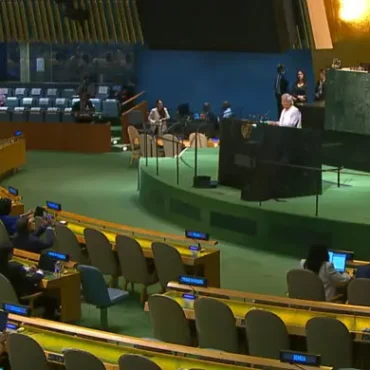
The Foreign Service Academy head also highlighted a funding crisis as a major obstacle, but hoped a solution would be found at the upcoming United Nations General Assembly meeting, which will feature a high-level conference on the situation of Rohingyas on September 30.
“I am hopeful that the upcoming UN conference may bring about a positive outcome on the Rohingya issue. Donors need to come forward,” he added.
Obaidul Haque, associate professor international relations at the University of Dhaka, also identified funding as the most critical challenge.
“Justice, politics, and repatriation are all connected to the Rohingya issue. There’s also a power struggle at play,” he added.
He also called for constructive media reporting and a push to keep the Rohingya crisis on the global agenda.
CA Press Secretary Shafiqul Alam also touched on the funding crisis as well, but also highlighted the media’s role.
“Bangladesh has done more than its share of responsibility. Now the world must act through financing, accountability, and burden-sharing. The responsibility of journalists is to continue accurate and real presentation of events and to ensure that the voices of the Rohingyas reach the places where decisions are made,” Alam said.
Bulbul Siddique, a professor of political science and sociology at North South University, elaborated further on the media’s responsibility.
“We often see media reports linking the Rohingya community to crime, drugs, and trafficking. But Rohingyas are not solely responsible; multiple factors are at play,” she said.
She urged the media not to demonise entire communities, stating that balanced reporting is essential for a sustainable solution.
PIB Director General Faruk Wasif emphasised, “Rohingyas are not statistics. They are people living with history, culture, struggle for survival, and dreams. As journalists, our duty is to ensure that their dignity is not lost and their voices are not silenced. Every headline built on human dignity and justice paves the way for lasting change to the problem.”
More than 40 journalists from Dhaka and Cox’s Bazar took part in the event.


WB to give $700m for 2 Rohingya projects The World Bank yesterday launched two new projects worth $700 million to improve basic services, strengthen disaster resilience and expand human capital […]