



search menu
play_arrow

keyboard_arrow_right

skip_previous play_arrow skip_next
00:00 00:00
playlist_play chevron_left
volume_up
chevron_left
play_arrow

August 2025

Episode: KPN 05-08-2025 

Kaladan Podcast August 5, 2025


Background
share close

Loading

Rohingya repatriation stalls amid mounting challenges

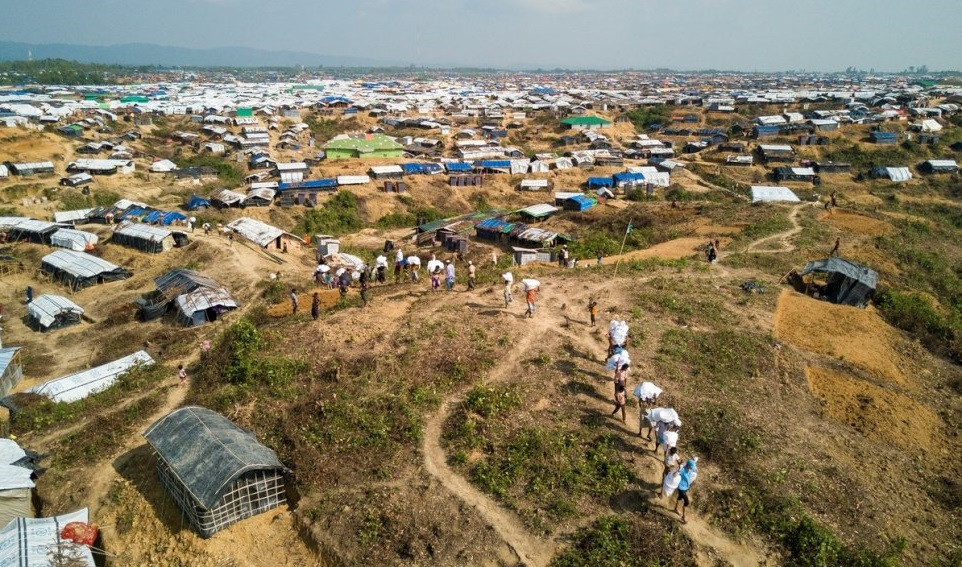
Five months after UN Secretary-General António Guterres visited the Rohingya camps in Cox’s Bazar and called for the swift repatriation of refugees to Myanmar, there has been no meaningful progress on the matter. Despite efforts by the Bangladeshi government to engage the Myanmar junta, there has been no positive response. In fact, Myanmar has reportedly forced more Rohingya into Bangladesh during this period.

According to sources in the Ministry of Finance and the Ministry of Home Affairs, the entire repatriation process is now effectively on hold.

To put diplomatic pressure on Myanmar, a special international conference on the Rohingya crisis is scheduled to be held on 25 August in Cox’s Bazar. Attendees will include ambassadors from various countries, UN officials, and relevant stakeholders. The conference will be inaugurated by Chief Advisor Dr Muhammad Yunus. Furthermore, a special session on the Rohingya crisis, international refugees, and ethnic minorities will be held at the United Nations headquarters on 30 September, where Bangladesh will strongly advocate for repatriation.

UN Secretary-General Guterres visited the camps in Ukhiya, Cox’s Bazar on 14 March and declared that the Rohingya wanted to return home to Myanmar and called for improved living conditions in the camps. He urged the international community and relevant nations to work together to initiate repatriation promptly, assuring maximum UN support. The interim Bangladeshi government echoed this sentiment, declaring that the repatriation process would begin shortly. However, nearly five months on, no concrete steps have been taken.

The Bangladeshi government maintains that Myanmar has shown no cooperation. On the contrary, they allege that more Rohingya have been forcibly pushed across the border in recent months. According to officials from the Chief Advisor’s Office and the Ministry of Finance, the Rohingya crisis remains unresolved, and the financial burden is growing. The government has appealed to the UNHCR and the World Bank for increased support. In response, the World Bank has requested an update on the progress of repatriation. The Ministry of Home Affairs is currently preparing a formal report.

Lieutenant General (Retd.) Md Jahangir Alam Chowdhury, Advisor to the Ministry of Home Affairs, emphasised the need for stronger international pressure on Myanmar, stating, “We are doing our part, but global support remains insufficient.”

Earlier, on 22 February, UN High Commissioner for Refugees Filippo Grandi met with the Home Affairs Advisor during his visit to Dhaka. Grandi discussed key issues such as repatriation, security and economic challenges posed by the refugee influx, third-country resettlement efforts, and the repercussions of halted US-AID funding. He also praised Bangladesh for hosting the Rohingya and pledged support for repatriation. However, that promise has yet to materialise.

When asked about the current status, Rohingya Refugee Relief and Repatriation Commissioner (Additional Secretary) Mohammad Mizanur Rahman told Bangladesh Pratidin, “There has been no formal progress on the repatriation front. We continue to engage with Myanmar and all concerned parties.”

Another source from the Home Ministry noted that during Guterres’ visit, the proposal to establish a humanitarian corridor through Bangladesh triggered strong internal backlash, which was poorly received by both the Myanmar junta and UNHCR. This backlash has had a negative impact on the repatriation process.

Both the UN and UNHCR have floated the idea of relocating Rohingya refugees to a third, safe country, though the UNHCR has consistently stressed the need for a permanent resolution. The US government also supported this proposal. However, implementation remains distant.

Dr Zahid Hussain, former Lead Economist at the World Bank’s Dhaka office, criticised the UN’s limited role: “The UN should be leading this effort, but it has failed to act effectively. It has proven itself largely ineffectual on this issue.” He believes a quick resolution to the Rohingya crisis is unlikely.

Tagged as: ,  ,  ,  ,  ,  ,  ,  ,  ,  ,  ,  ,  ,  ,  ,  ,  ,  ,  ,  ,  ,  ,  ,  ,  ,  ,  ,  ,  ,  ,  ,  ,  ,  ,  ,  ,  .

Download now: Episode: KPN 05-08-2025 

file_download Download

Rate it
Previous episode