


Episode: KPN 03-01-2026

Repatriation to Myanmar only viable solution to Rohingya crisis – experts Sustainable resolution of the Rohingya crisis lies in Myanmar, with repatriation remaining the only viable long-term solution, speakers said […]


 play_arrow
Episode: KPN 31-10-2026 Kaladan Podcast
 play_arrow
Episode: KPN 30-10-2026 Kaladan Podcast
 play_arrow
Episode: KPN 29-10-2026 Kaladan Podcast
 play_arrow
Episode: KPN 28-10-2026 Kaladan Podcast
 play_arrow
Episode: KPN 04-01-2026 Kaladan Podcast
The Rohingya refugee crisis, now in its eighth year, continues to present severe humanitarian and public health challenges for Bangladesh. This is most evident in Ukhia of Cox’s Bazar, where nearly one million Rohingya refugees live in some of the world’s most densely populated camps. While displacement and survival have dominated global attention, a quieter yet equally alarming crisis is unfolding: the rapid spread of communicable diseases.
Overcrowded shelters, inadequate sanitation, unsafe water sources and widespread malnutrition have created ideal conditions for infectious diseases. Recurrent outbreaks of cholera, acute watery diarrhoea, tuberculosis, diphtheria, measles and skin infections remain common, while respiratory illnesses disproportionately affect children and the elderly. In such fragile settings, even minor infections can quickly escalate into life-threatening epidemics.
The threat is not confined to the camps alone. Host communities in Cox’s Bazar are also at risk, as communicable diseases do not respect geographic boundaries. This creates a dual challenge: protecting a highly vulnerable displaced population while safeguarding national public health security. Failure to respond effectively could have consequences far beyond Ukhia.
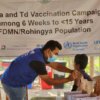
Despite commendable efforts by the Government of Bangladesh, international NGOs and frontline health workers, the response is under growing strain. Declining humanitarian funding has weakened vaccination programmes, nutrition support and disease surveillance, while camp health facilities remain overcrowded, understaffed and under-supplied.
What is urgently needed is renewed national and international commitment. Strengthened disease surveillance, expanded immunisation coverage, uninterrupted supplies of essential medicines and improved water and sanitation services are critical. Equally important is community engagement, empowering Rohingya refugees through health education and hygiene practices.
Bangladesh has shown remarkable generosity and resilience, but the communicable disease crisis in Ukhia is not only a humanitarian concern; it is a global public health issue. Neglect of it risks reversing decades of progress in regional disease control.


Repatriation to Myanmar only viable solution to Rohingya crisis – experts Sustainable resolution of the Rohingya crisis lies in Myanmar, with repatriation remaining the only viable long-term solution, speakers said […]


