


chevron_left
-
 play_arrow
Episode: KPN 10-08-2026 Kaladan Podcast
-
 play_arrow
Episode: KPN 08-08-2026 Kaladan Podcast
-
 play_arrow
Episode: KPN 07-08-2026 Kaladan Podcast
-
 play_arrow
Episode: KPN 06-08-2026 Kaladan Podcast

-
 play_arrow
Episode: KPN 01-08-2026 Kaladan Podcast
Malaysia detains over 100 Rohingya Refugees seeking protection outside UNHCR Office
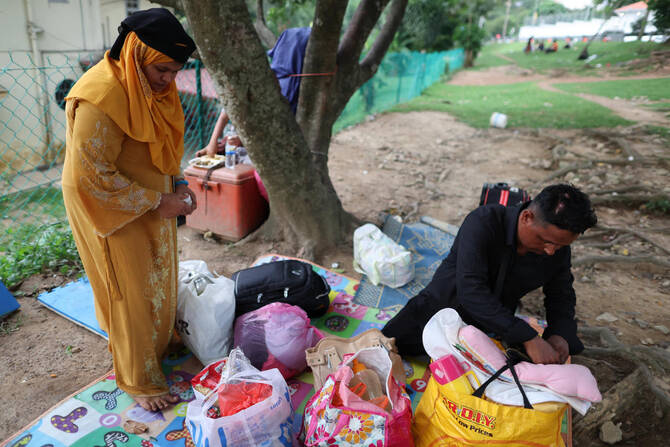
More than 100 Rohingya Muslim refugees, including women and children, were detained by Malaysian authorities after gathering outside the United Nations High Commissioner for Refugees (UNHCR) office in Kuala Lumpur on Monday to seek protection and assistance following their reported eviction from homes in Penang.
According to Reuters witnesses, police officers transported all of the refugees and their belongings in four police trucks at around 8:30 p.m. local time, taking them to Kuala Lumpur police headquarters for further screening.
Refugees Say They Were Forced from Their Homes
The Rohingya refugees said they had been driven from their homes in Penang State by local residents on Sunday. They travelled overnight by bus to Kuala Lumpur, hoping to seek assistance from the UNHCR, including support for refugee protection and possible third-country resettlement.
Among those detained were families with young children, many of whom said they had nowhere else to go.
However, Penang police stated that the Rohingya had “voluntarily moved” to Kuala Lumpur with assistance from state and federal authorities, including Malaysia’s National Security Council.
In a statement, Seberang Perai Utara District Police Chief Anuar Abdul Rahman said the relocation followed “economic and territorial competition” resulting from an increase in the Rohingya population in the area.
Detentions Follow Rising Anti-Rohingya Sentiment
The incident comes amid a sharp increase in anti-Rohingya rhetoric in Malaysia since May, fueled by online hate speech, misinformation and inflammatory social media campaigns.
Human rights organizations say the hostile online environment has contributed to increased harassment of Rohingya communities, the closure of refugee learning centres and growing public hostility toward asylum seekers.
Prime Minister Warns Against Unauthorized Gatherings
Malaysian Prime Minister Anwar Ibrahim said the gathering outside the UNHCR office had caused public concern and warned that foreigners without valid immigration documents would face detention.
“No one has the right to take over any part of the city,” Anwar said in a video message posted on social media.
Malaysia is not a signatory to the 1951 UN Refugee Convention and considers asylum seekers to be undocumented migrants under domestic immigration law.
Rights Groups Urge Protection Instead of Arrests
Bryony Lau, Deputy Asia Director at Human Rights Watch (HRW), said Rohingya refugees in Malaysia already live under constant fear of immigration raids and arrests, a situation that has worsened due to the recent surge in online hate campaigns.
“The Malaysian government should prioritize protecting refugees who have been evicted from their homes instead of terrifying them further by detaining them,” she said.
According to the UNHCR, approximately 126,000 Rohingya refugees were registered in Malaysia as of the end of February, although rights groups believe many more remain undocumented.
Refugees Say They Received No Assistance
One refugee, Syed Kasim, said he arrived at the UNHCR office with his wife and children early Monday after living in Malaysia for two decades.
“Nobody helped our problem. Nobody understands,” he told Reuters.
The UNHCR office in Kuala Lumpur did not immediately comment on Monday’s detentions.
However, the agency previously expressed concern over the recent increase in online hate speech, misinformation and dehumanizing narratives targeting Rohingya and other refugee communities, warning that such content could encourage discrimination and violence offline.
Safe Haven Under Growing Pressure
For decades, Muslim-majority Malaysia was regarded as one of the few relatively safe destinations for Rohingya fleeing persecution in Myanmar.
Public attitudes, however, shifted during the COVID-19 pandemic after widespread misinformation accused Rohingya refugees of spreading the virus, ignoring local customs and competing with Malaysians for employment.
Rights advocates warn that continued hostility, combined with immigration enforcement and online incitement, is placing already vulnerable Rohingya families at even greater risk.


Similar episodes


