
Episode: KPN 06-08-2026

Malaysia says Rohingya repatriation will not proceed if safety cannot be guaranteed Malaysia has reaffirmed that it will not repatriate an initial group of 5,000 Rohingya refugees to Myanmar unless […]


 play_arrow
Episode: KPN 10-08-2026 Kaladan Podcast
 play_arrow
Episode: KPN 08-08-2026 Kaladan Podcast
 play_arrow
Episode: KPN 07-08-2026 Kaladan Podcast
 play_arrow
Episode: KPN 06-08-2026 Kaladan Podcast
play_arrow
Episode: KPN 07-08-2026 Kaladan Podcast
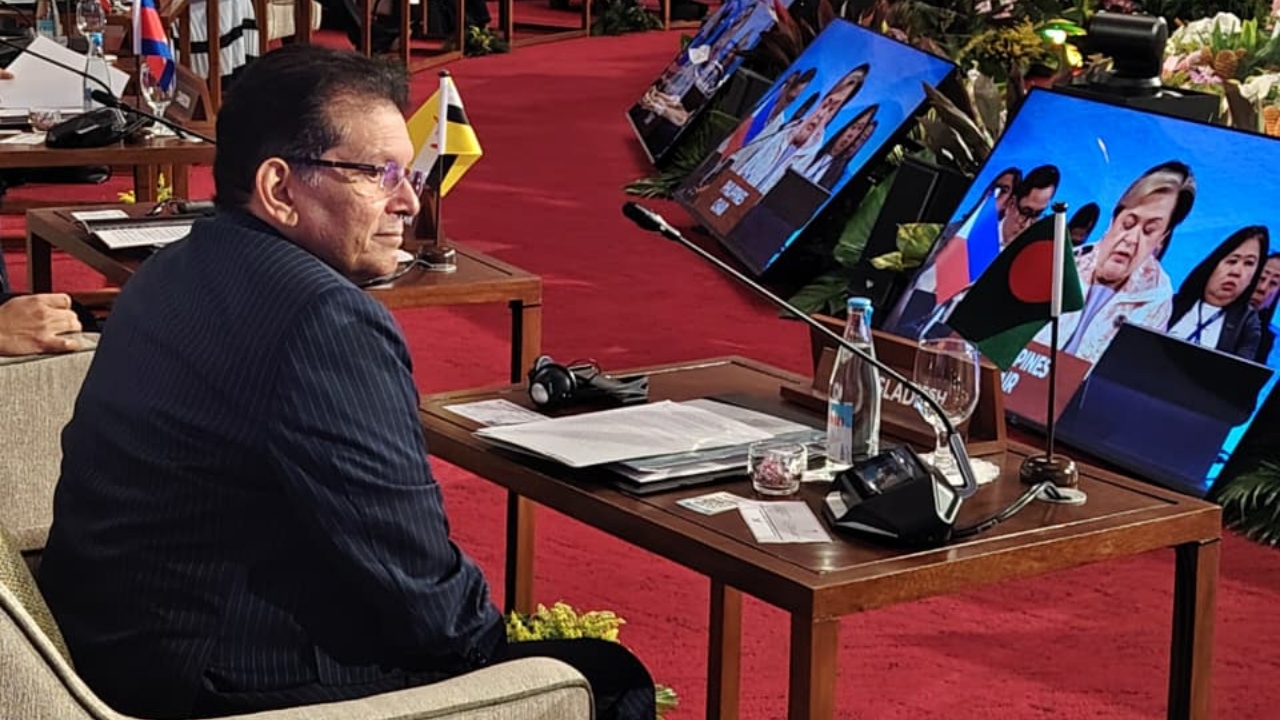
Bangladesh Foreign Minister Khalilur Rahman has called for stronger regional cooperation and a sustainable political solution to the Rohingya crisis, telling the ASEAN Regional Forum that the Rohingya are “not stateless by circumstance” but “stateless by design.”
Addressing the 33rd ASEAN Regional Forum (ARF) Ministerial Meeting in Manila on Thursday, Khalilur reaffirmed Bangladesh’s commitment to dialogue, multilateralism and a rules-based international order.
He also thanked participating countries for supporting Bangladesh’s candidature for the presidency of the 81st Session of the United Nations General Assembly.
Bangladesh Says Rohingya Crisis Requires Political Solution
Khalilur said Bangladesh has carried the humanitarian responsibility of hosting more than 1.3 million forcibly displaced people from Myanmar for nearly a decade.
“The Rohingya are not stateless people by circumstance, they are stateless by design. It is a political failure demanding a political solution,” he said.
He urged ARF members to support efforts to create conditions inside Myanmar that would allow Rohingya refugees to return voluntarily, safely, with dignity and on a sustainable basis to their homeland in Rakhine State.
Bangladesh Links Protracted Crisis to Cross-Border Crime
The foreign minister said the prolonged displacement had also exposed Bangladesh to growing transborder security challenges.
He cited drug trafficking, human trafficking and illicit flows of arms and weapons among the problems affecting Bangladesh as the crisis continued.
The comments underline Dhaka’s longstanding position that the Rohingya issue is not only a humanitarian emergency but also a regional political and security concern.
Dialogue and Diplomacy Urged on Regional Security
Turning to wider security issues, Khalilur said sustained dialogue and diplomacy remained the most effective tools for managing geopolitical tensions.
He called on states involved in maritime disputes to exercise maximum restraint and comply with international law.
He specifically highlighted the United Nations Convention on the Law of the Sea, or UNCLOS, as a key legal framework for managing maritime disagreements.
Bangladesh Calls for Stronger Climate Resilience
Khalilur also drew attention to Bangladesh’s vulnerability to climate change and natural disasters.
As Co-Chair of the ARF Inter-Sessional Meeting on Disaster Relief, Bangladesh would continue advocating stronger regional resilience and closer cooperation on early-warning systems, he said.
The foreign minister presented disaster preparedness as another area where regional cooperation could directly strengthen human security.
AI, Cybersecurity and Disinformation Also on Agenda
Khalilur also addressed the rapid development of artificial intelligence and the risks accompanying new technologies.
He called for closer regional cooperation on cybersecurity threats and disinformation and proposed exploring a regional technology-governance framework suited to the developmental realities of participating countries.
The proposal reflects growing concern across the region over the political, social and security implications of emerging technologies.
Bangladesh Reaffirms Support for Regional Cooperation
Concluding his remarks, Khalilur said Bangladesh would continue to support cooperation based on mutual respect, dialogue and shared prosperity.
“Bangladesh will always choose dialogue over division, partnership over polarisation,” he said.
For Bangladesh, the Rohingya crisis remains one of its most urgent diplomatic priorities, with Dhaka continuing to seek international pressure and regional engagement to create conditions in Myanmar for a durable, rights-based solution.



Malaysia says Rohingya repatriation will not proceed if safety cannot be guaranteed Malaysia has reaffirmed that it will not repatriate an initial group of 5,000 Rohingya refugees to Myanmar unless […]