


search menu
play_arrow

keyboard_arrow_right

skip_previous play_arrow skip_next
00:00 00:00
playlist_play chevron_left
volume_up
chevron_left
play_arrow

September 2026

Episode: KPN 13-09-2026

Kaladan Podcast September 13, 2026


Background
share close

Loading

Bangladesh to engage China, Myanmar in search for sustainable Rohingya solution

Bangladesh plans to hold talks with China and Myanmar as part of renewed diplomatic efforts to find a peaceful and sustainable political solution to the prolonged Rohingya crisis, State Minister for Foreign Affairs Humaiun Kobir said on Thursday.

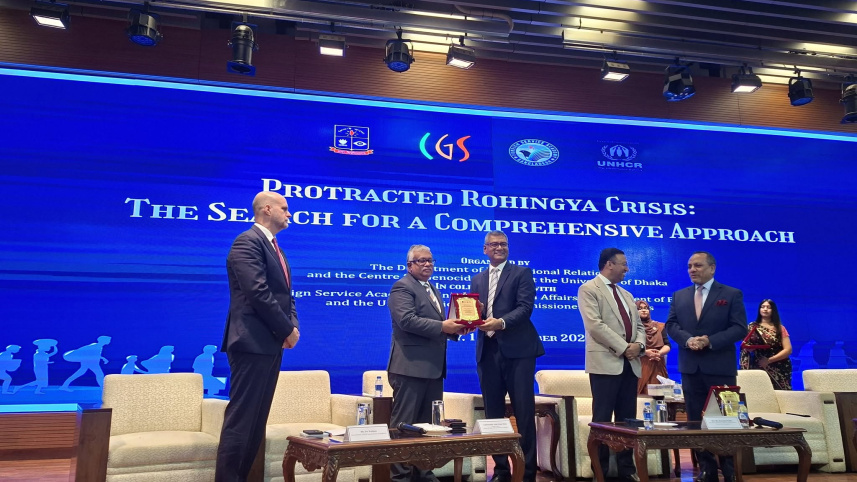
Speaking at an international conference titled “Protracted Rohingya Crisis: The Search for a Comprehensive Approach” at the Foreign Service Academy in Dhaka, Kobir said political engagement was necessary to end the prolonged displacement of Rohingya refugees.

“Only a political solution can end the prolonged displacement of the Rohingya,” Kobir said.

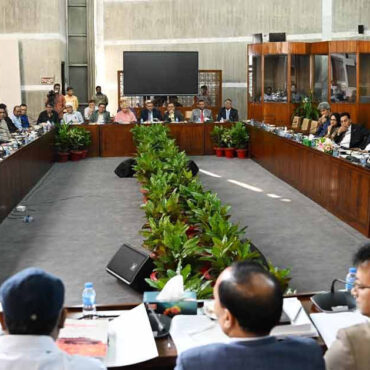
The conference brought together government officials, diplomats, academics, international organizations, experts and Rohingya representatives to discuss humanitarian assistance, international responsibility-sharing, repatriation and possible regional and global approaches to the crisis.

Dhaka plans engagement with Beijing and Myanmar

Kobir said Bangladesh would engage China and Myanmar as it seeks to break the long-running deadlock over Rohingya repatriation.

The state minister did not announce a timetable or specific framework for the planned talks.

China has previously been involved in diplomatic efforts between Bangladesh and Myanmar over Rohingya repatriation, while Dhaka has maintained that the ultimate solution to the crisis lies in Myanmar.

Kobir said Bangladesh had provided shelter and protection to more than one million forcibly displaced people from Myanmar since the mass displacement of 2017 despite significant pressure on the country.

He said the prolonged crisis had affected Bangladesh’s economy, environment, public services, local host communities and national security.

Safe, voluntary and dignified return remains Bangladesh’s objective

Kobir reiterated that Bangladesh’s stated objective is the safe, voluntary, dignified and sustainable repatriation of Rohingya refugees to Myanmar.

He said Bangladesh did not create the Rohingya crisis and could not resolve it alone, calling for stronger and sustained political engagement by the international community.

Bangladesh remains committed to pursuing regional diplomacy alongside multilateral efforts to create conditions for Rohingya return, Kobir said.

The government has also established a National Strategy Formulation Committee on Rohingya Affairs under Prime Minister Tarique Rahman, bringing together diplomatic, humanitarian and security institutions to coordinate the country’s approach to the crisis.

UNHCR: Root causes of crisis remain in Myanmar

UNHCR Representative in Bangladesh Ivo Freijsen told the conference that the origins and root causes of the Rohingya crisis lie in Myanmar.

Freijsen said Rohingya refugees have consistently expressed a desire to return to their homeland, but emphasized that any repatriation must take place under conditions that are safe and dignified and include restoration of their citizenship and rights.

He said voluntary and sustainable repatriation would remain difficult until conditions in Myanmar ensure safety, freedom of movement, access to essential services, documentation, citizenship and recognition of Rohingya rights.

Those conditions have remained central to international discussions over repatriation, particularly as conflict and instability continue in Rakhine State.

Bangladesh links accountability with sustainable return

Kobir also said accountability for alleged atrocities against Rohingya and their sustainable return to Rakhine State should advance together.

Bangladesh supports accountability proceedings before the International Court of Justice (ICJ) and International Criminal Court (ICC), he said.

The state minister called for stronger regional diplomacy and sustained international responsibility-sharing, arguing that humanitarian assistance alone cannot provide a permanent solution to the crisis.

His remarks reflect Bangladesh’s effort to shift international attention from managing prolonged displacement toward creating political conditions for a sustainable return.

Conference examines comprehensive approach to Rohingya crisis

The day-long conference was organized by the Department of International Relations and Centre for Genocide Studies at the University of Dhaka, in collaboration with the Foreign Service Academy under the Ministry of Foreign Affairs and UNHCR.

Foreign Secretary Asad Alam Siam, Foreign Service Academy Rector Muhammad Abdul Muhith, UNHCR Representative Ivo Freijsen and conference convener Professor ASM Ali Ashraf were among those attending.

Discussions covered the humanitarian and security consequences of prolonged displacement, international burden-sharing, prospects for safe and sustainable repatriation and regional and international options for breaking the current impasse.

For Bangladesh, Kobir said the central objective remains enabling Rohingya refugees to return to Myanmar safely, voluntarily, with dignity and on a sustainable basis, while seeking stronger international political engagement to address the causes of their displacement

Tagged as: , , , , , , , , , , , , , , , , , , , , , , , , , , , , , , , , , , , , , , , , , .

Download now: Episode: KPN 13-09-2026

file_download Download

Rate it
Previous post