

Episode: KPN 12-03-2026

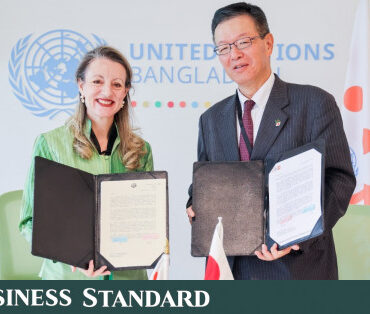
Japan pledges $16.5 million in March to support Rohingya refugees, host communities in Bangladesh Since the Rohingya crisis began in August 2017, Japan has been one of the most consistent […]


 play_arrow
Episode: KPN 30-09-2026 Kaladan Podcast
 play_arrow
Episode: KPN 29-09-2026 Kaladan Podcast
 play_arrow
Episode: KPN 28-09-2026 Kaladan Podcast
 play_arrow
Episode: KPN 27-09-2026 Kaladan Podcast
 play_arrow
Episode: KPN 13-03-2026 Kaladan Podcast
Stateless Rohingya refugees in India face job barriers, exploitation and detention fears as lack of legal recognition blocks access to work and services
Thousands of Rohingya refugees living in India face severe economic hardship as the absence of legal refugee recognition prevents them from accessing formal jobs, banking services and basic protections.
India hosts an estimated 40,000 Rohingya refugees who fled persecution in Myanmar and now live in informal settlements around cities such as New Delhi, Hyderabad and Jammu. According to Maktoob Media, an independent Indian news outlet, many Rohingya families say the lack of official identification documents has effectively locked them out of the country’s formal economy.
Sohail Khan, a 33-year-old Rohingya refugee living in Delhi’s Shaheen Bagh neighborhood, once hoped to build a professional career after studying psychology. Instead, he now works at a small handicraft stall after years of struggling to find stable employment. Like many Rohingya refugees, Khan said employers frequently reject job applications when applicants cannot provide government-issued identity documents.
India does not have a national refugee law and is not a signatory to the 1951 United Nations Refugee Convention. As a result, Rohingya refugees often rely on identification cards issued by the UN refugee agency, UNHCR, which are not widely accepted for employment, banking or official verification.
Amina Khatoon, a Rohingya mother of three who has lived in India for more than a decade, said employers routinely ask for national identity documents such as Aadhaar numbers before offering work. Without those documents, she said, finding stable employment becomes nearly impossible.
Many Rohingya refugees therefore rely on informal work such as construction labor, scrap collection and street vending. Abdullah, another Rohingya resident in Delhi, said he is typically called for only a few days of casual work each month, leaving his family dependent on irregular income from multiple small jobs.
Researchers and aid workers say this legal exclusion leaves Rohingya refugees highly vulnerable to exploitation. Mohd Zubair, a laborer in the capital, described instances where employers refused to pay wages after learning he was a refugee with no official documentation.
The lack of government-recognized identity documents also prevents Rohingya refugees from opening bank accounts or using digital payment platforms that have become common across India’s economy, forcing many families to rely entirely on cash transactions.
Beyond economic hardship, Rohingya refugees also live with constant fear of detention or deportation. Human rights organizations have documented cases where Rohingya individuals were detained by Indian authorities despite holding refugee documents issued by the United Nations.
Experts say this climate of legal uncertainty discourages refugees from investing in businesses or long-term livelihoods, trapping many families in cycles of informal labor and poverty.



Japan pledges $16.5 million in March to support Rohingya refugees, host communities in Bangladesh Since the Rohingya crisis began in August 2017, Japan has been one of the most consistent […]


