Episode: KPN 23-12-2025

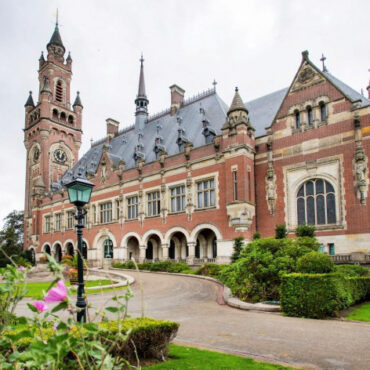
ICJ to hear Rohingya genocide case against Myanmar in January 2026 The International Court of Justice (ICJ), the principal judicial organ of the United Nations, will hold public hearings in […]


 play_arrow
Episode: KPN 30-09-2026 Kaladan Podcast
 play_arrow
Episode: KPN 29-09-2026 Kaladan Podcast
 play_arrow
Episode: KPN 28-09-2026 Kaladan Podcast
 play_arrow
Episode: KPN 27-09-2026 Kaladan Podcast
 play_arrow
Episode: KPN 24-12-2025 Kaladan Podcast
The Rohingya of Myanmar, the world’s most persecuted ethnic minority, can look forward to next year as annus mirabilis when the International Court of Justice (ICJ) begins its public hearing of a genocide case against Myanmar filed by the Gambia in 2019.
Yes, years have passed between then and now, making a mockery of the principle of Anglo-American jurisprudence expressed in the 13th century Magna Carta, an English Charter of rights, best articulated in modern English by former prime minister William Ewart Gladstone: “Justice delayed is justice denied”.
And when the ICJ did issue a ruling in January 2020 ordering the Myanmar military regime to adopt measures to prevent genocide against the Rohingya, it was defiant, denying that it was committing genocide.
Media reports quoted witnesses as telling of hundreds of thousands of the ethnic minority being slaughtered in the worst Southeast Asian bloodshed in history, with 700,000 fleeing Myanmar.
Most of them landed in Bangladesh, with some reaching Malaysia and Indonesia by boats. Many of them died at sea. The flow of fleeing Rohingya hasn’t ceased, indicating that the Buddhist-majority military regime is still continuing its genocide against its ethnic minority.
A glimmer of hope was presented by the press release issued by the Hague-based ICJ on Friday, when it said public hearings will run from Jan 12 to 29.
Why just a glimmer of hope? A few reasons. Firstly, we live in a “might-is-right” world, where powerful nations express their disrespect for the rule of law in ways never done before.
Who would have thought international courts would be sanctioned for doing their job. Yet Washington did exactly that against the International Criminal Court. These are impunity boosters for genocidal regimes like Israel and Myanmar.
Secondly, the ICJ comes with an inherent weakness. Although its rulings are enforceable, it just doesn’t have the means to do so.
Israel’s continued defiance against ICJ’s ruling in the genocide case filed against the Tel Aviv regime by South Africa is a glaring example.
The Gambia accuses Myanmar authorities of violating the UN Genocide Convention during a brutal crackdown on the Rohingya in 2017, following which witnesses reported murders, rape and arson targeting the minority.
Hundreds of thousands fled the bloodshed in waves to Bangladesh where more than a million of them are said to languish in makeshift camps since then. There are two important things that the Gambia is asking the ICJ to rule on.
For the genocide against the Rohingya to end, both must be granted. One is accountability of the Myanmar regime for its breach of the Genocide Convention. Two is the request for the court to rule on reparations for the victims and guarantees that the atrocities will never happen again.
Whether we like it or not, the genocide case filed against Myanmar by far-away the Gambia from West Africa is an indictment of Asean’s inability to end one of its members’ slaughter of its minority. Genocidal regimes mustn’t be allowed to be part of civilised bodies of nations.


ICJ to hear Rohingya genocide case against Myanmar in January 2026 The International Court of Justice (ICJ), the principal judicial organ of the United Nations, will hold public hearings in […]