Episode: KPN 20-07-2025

Funding cuts heighten monsoon risks for Rohingya refugees in Bangladesh Cuts to a programme that maintained communal facilities for refugees in Cox’s Bazar have meant lost income for families and […]


 play_arrow
Episode: KPN 10-10-2026 Kaladan Podcast
 play_arrow
Episode: KPN 09-10-2026 Kaladan Podcast
 play_arrow
Episode: KPN 08-10-2026 Kaladan Podcast
 play_arrow
Episode: KPN 07-10-2026 Kaladan Podcast
 play_arrow
Episode: KPN 21-07-2025 Kaladan Podcast
In Myanmar’s troubled Rakhine state, a new horror is unfolding largely unobserved. The long-persecuted Rohingya have been caught in the crossfire of the country’s ongoing civil war, and now they are being deliberately starved.
Recent reports from inside the mostly closed country, including from the Burmese Rohingya Organization UK, detail how the ruling junta has imposed blockades that cut off virtually all vital supplies to the 145,000 Rohingya confined to overcrowded, squalid internment camps. At least 25 Rohingya adults are reported to have died this year from starvation, and seven died from a lack of medical care. Children are suffering from malnutrition.
Rohingya men are being forcibly conscripted to fight in the Myanmar army, and some volunteer on the promise that their families will be fed in lieu of receiving salaries. Women, many widowed, have been left begging for food from camp to camp or engaging in sex work for survival.
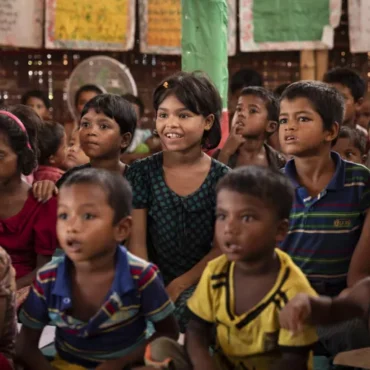
The desperation inside Myanmar mirrors the disaster in the teeming refugee camps across the border in Bangladesh. There, nearly 1 million Rohingya, having fled earlier waves of ethnic violence in Myanmar, face similar despair. Bangladesh, itself a poor country, has borne an immense burden hosting the world’s largest refugee camp at Cox’s Bazar. The Bangladeshi government wants the Rohingya to return home, refusing to offer them asylum or allow them to work, go to school, or build permanent structures in which to live.
Conditions in the camps have deteriorated since daily food rations were slashed — a direct result of global aid funding shortfalls, including from the United States. Desperate refugees have tried to escape the awful conditions in Bangladesh by risking perilous sea journeys in overcrowded boats bound for majority-Muslim countries Malaysia and Indonesia. Hundreds have drowned. As hungry refugees flee Bangladesh, those who manage to escape Myanmar, also known as Burma, continue to arrive. Some 150,000 Rohingya have entered Bangladesh in recent months, with the arrivals showing the telltale signs of malnutrition.
The Trump administration’s sweeping cuts to foreign aid have exacerbated this crisis. Relief groups, grappling with significant funding cuts, have reduced daily food rations by half. Clinics have halted all but emergency treatment. Programs for child protection, mental health and prevention of gender-based violence have been curtailed.
The U.S. retreat is creating a moral and strategic vacuum. China has been quick to step into the void. Beijing prioritizes stability along its 1,300-mile border with Myanmar and wants to protect its vast economic interests in the country. That includes its China-Myanmar Economic Corridor: a wide-ranging infrastructure project involving high-speed rail, a port, and oil and gas pipelines that connect landlocked Yunnan province to the Indian Ocean.
Beijing nominally engages with both the junta and some of the armed ethnic groups holding sway in border regions. But China has also protected the junta from tougher international sanctions and has treated the junta leader, Gen. Min Aung Hlaing, as an esteemed head of state. Chinese President Xi Jinping and Min Aung Hlaing met recently in Moscow, and China’s top diplomat has traveled to Myanmar.
Myanmar’s military regime has suffered significant setbacks since the launch of the rebel groups’ October 2023 offensive, which saw the insurgents overrun many military outposts and capture most of Myanmar’s border regions. But, using drones for targeted airstrikes and forced conscription to refill its depleted army ranks, the junta has managed to retake some towns. Those recent battlefield successes, the junta leader’s international forays and the continued paralysis of the Association of Southeast Asian Nations promote the sense that the military regime is regaining control and legitimacy.
The junta is now talking about trying to hold elections this year or in January. China has backed the idea and is encouraging countries in the region to support it, too. But any such exercise would be a sham. Political parties have been banned, including the National League for Democracy, which overwhelmingly won the last election in 2020. Key political leaders, including Nobel laureate Aung San Suu Kyi, remain imprisoned. Millions of people are internally displaced or in exile. And the junta controls only about a third of the country, including the capital, Naypyidaw, and the largest city, Yangon.
The Trump administration should recognize the urgency of the Myanmar crisis. Funding for humanitarian operations in Myanmar and Bangladesh should be restored. There should be an expanded and targeted pressure campaign of sanctions against the regime, including against the junta’s oil and gas revenue, its remaining unsanctioned financial institutions, and international suppliers of jet fuel that keep its air force functioning. And the U.S. should use a high-level U.N. conference on the Rohingya crisis in September to press for a sustainable resolution for the displaced, including their safe, voluntary return home with full citizenship rights.
“America First” shouldn’t mean American neglect. The United States should not turn a disengaged eye from the suffering of the Rohingya.



Funding cuts heighten monsoon risks for Rohingya refugees in Bangladesh Cuts to a programme that maintained communal facilities for refugees in Cox’s Bazar have meant lost income for families and […]