search menu
play_arrow

keyboard_arrow_right

skip_previous play_arrow skip_next
00:00 00:00
playlist_play chevron_left
volume_up
chevron_left
play_arrow

October 2026

Episode: KPN 10-10-2026

Kaladan Podcast October 10, 2026


Background
share close

Loading

Former Rohingya MP says he was pressured to abandon Rohingya identity before 2015 Myanmar election

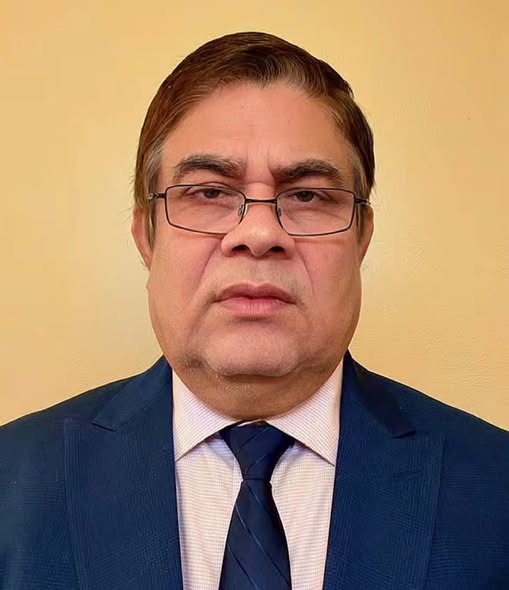
Former Myanmar parliamentarian Shwe Maung has publicly disclosed that a senior ruling-party figure allegedly pressured him ahead of the 2015 general election to stop advocating for Rohingya identity and encourage his constituents to identify as “Bengali,” saying his continued political career was linked to accepting the proposal.

Writing in an opinion article published on October 10, Shwe Maung said the conversation took place in July 2015 at the Naypyidaw residence of U Aung Thaung, then a senior and influential figure in the Union Solidarity and Development Party (USDP).

Shwe Maung, who represented Buthidaung Township in the Pyithu Hluttaw after winning the seat as a USDP candidate in the 2010 election, said he was preparing to seek another parliamentary term when the alleged proposal was made.

According to his account, U Aung Thaung told him that senior political and military figures did not accept “Rohingya” as an ethnic identity and urged him to persuade Rohingya constituents to identify as “Bengali” instead.

Shwe Maung said he refused.

The account concerns a private conversation more than 11 years ago. KPN has not independently verified what was said during the meeting, and Shwe Maung himself states that he did not personally hear the other senior figures named in the conversation authorize the alleged proposal.

Shwe Maung alleges identity change was linked to political future

Shwe Maung said U Aung Thaung presented abandoning the Rohingya designation as a possible route towards obtaining citizenship documentation and restoring political participation.

According to his recollection, he was also encouraged to give a media interview declaring that “there is no Rohingya but Bengali” without revealing the private meeting or U Aung Thaung’s involvement.

Shwe Maung said he understood that securing another USDP parliamentary nomination depended on his willingness to support that position.

He rejected the proposal.

“I could not ask my constituents to surrender their identity in exchange for the possibility of receiving documents, voting rights, or another parliamentary term,” Shwe Maung wrote.

He said he subsequently informed community leaders and constituents about the discussion and that they supported his decision.

Shwe Maung said he did not disclose the alleged meeting publicly at the time because he feared the political consequences while still living in Myanmar.

Former MP says senior officials were named during meeting

According to Shwe Maung, U Aung Thaung told him that the USDP leadership, then-President Thein Sein and then Commander-in-Chief Min Aung Hlaing did not accept Rohingya as an ethnic identity.

However, Shwe Maung explicitly acknowledged that this information came from U Aung Thaung.

He said he could not claim to have personally heard either Thein Sein or Min Aung Hlaing authorize the proposal.

Shwe Maung also recalled seeing portraits of Thein Sein, Min Aung Hlaing and nationalist Buddhist monk U Wirathu at an office inside the residence. He said an assistant told him the office was also used by Wirathu when he visited Naypyidaw.

These details are Shwe Maung’s recollections and have not been independently verified by KPN.

Shwe Maung further alleged that U Aung Thaung telephoned then Union Immigration Minister U Khin Yi in his presence and discussed the proposal.

Shwe Maung resigned from USDP before candidacy was rejected

Shwe Maung resigned from the USDP on August 4, 2015.

Two days later, he applied to contest the Pyithu Hluttaw election in Buthidaung as an independent candidate.

On August 22, the Maungdaw District Election Subcommission rejected his candidacy on the grounds that his parents had not been Myanmar citizens when he was born in 1965, according to his account.

Shwe Maung appealed the decision to the Rakhine State Election Subcommission, but the rejection was upheld on September 1.

He said the Union Election Commission subsequently affirmed the decision in a letter dated September 6, 2015.

2010 recognition and 2015 rejection raise questions

Shwe Maung argues that his rejection in 2015 contrasted sharply with his previous recognition by Myanmar’s election authorities.

He had been elected to the Pyithu Hluttaw from Buthidaung in the November 7, 2010 election.

According to Shwe Maung, a Union Election Commission recognition certificate dated January 10, 2011 recorded him as Buthidaung’s elected representative and documented his citizenship card.

Five years later, election authorities concluded that he did not meet eligibility requirements because they considered the evidence concerning his parents’ citizenship insufficient.

Shwe Maung said the Rakhine State Election Subcommission acknowledged that his father held a national registration card and that his maternal grandparents also possessed such documentation, but nevertheless ruled that the evidence did not satisfy the citizenship requirements under election law.

He maintains that he submitted the same family citizenship documentation during both electoral processes.

However, Shwe Maung also acknowledged that a complete comparison would require examination of his original 2010 candidate application alongside the 2015 records.

No documentary proof cited linking refusal to disqualification

Shwe Maung believes his exclusion from the 2015 election cannot be separated from the political pressure he says he experienced over Rohingya identity.

But he also makes an important distinction between that interpretation and what the official election records establish.

The election decisions themselves do not prove that his refusal to accept U Aung Thaung’s alleged proposal caused his candidacy to be rejected.

That causal link therefore remains Shwe Maung’s assessment rather than an independently established finding.

Shwe Maung publicly discussed the disenfranchisement of Rohingya voters and candidates in a November 2015 opinion article for The New York Times, but said he did not reveal the earlier private conversation at that time.

Rohingya identity intertwined with citizenship and political rights

The disclosure draws renewed attention to the longstanding relationship between Rohingya identity, citizenship documentation and political participation in Myanmar.

Successive Myanmar authorities have rejected or contested the term “Rohingya,” frequently referring to members of the community as “Bengali,” a designation rejected by many Rohingya who identify themselves as an indigenous community of Rakhine State.

The dispute has had consequences extending far beyond terminology.

Questions of citizenship, voting rights, political representation, freedom of movement and access to basic rights have repeatedly intersected with the refusal to recognise Rohingya self-identification.

The Myanmar military’s 2017 operations in Rakhine State subsequently drove hundreds of thousands of Rohingya into Bangladesh and intensified international efforts seeking accountability for alleged grave international crimes.

Shwe Maung links experience to ASEAN engagement

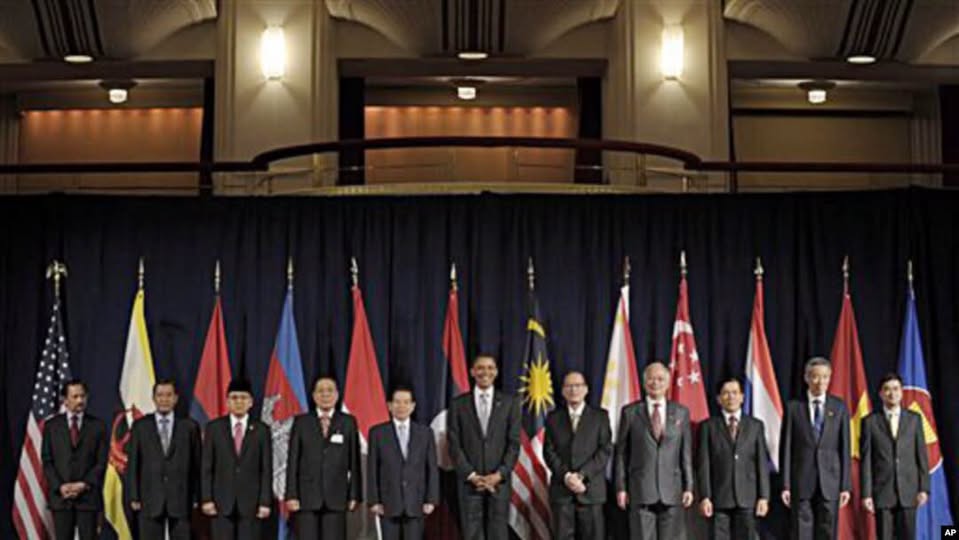
Shwe Maung argues that his 2015 experience remains relevant as ASEAN governments consider how to engage Myanmar’s leadership over armed conflict, humanitarian access, refugees and regional security.

He acknowledged that diplomatic engagement does not necessarily constitute recognition or endorsement.

But he argued that such engagement should be assessed according to whether it improves the rights and security of people affected by Myanmar’s continuing crisis.

For Rohingya, he said, repatriation discussions cannot be separated from the circumstances that forced them to flee.

“A refugee cannot be expected to regard return as durable when questions of identity, citizenship, personal security, and political belonging remain unresolved,” he wrote.

ASEAN urged to address citizenship and Rohingya rights

Shwe Maung called on ASEAN to make Rohingya rights a substantive part of discussions with Myanmar authorities.

He identified equal citizenship rights, the right to self-identification, meaningful political participation, protection against further atrocities and accountability for grave violations among the issues requiring attention.

He also called for conditions enabling Rohingya refugees to return voluntarily, safely, with dignity and on a sustainable basis.

A sustainable return would additionally require practical answers concerning freedom of movement, security, access to livelihoods and services, and the ability of displaced Rohingya to return to their places of origin and exercise housing, land and property rights.

Shwe Maung argued that these questions cannot be separated from Myanmar’s wider political crisis or the rights and aspirations of other communities affected by military rule and armed conflict.

‘No community must choose between its identity and its rights’

Eleven years after the alleged meeting, Shwe Maung said he remains convinced that Rohingya rights should not depend on individuals abandoning the identity by which they identify themselves.

His account provides personal testimony about how identity, citizenship and electoral participation intersected during a period when Rohingya political rights were being increasingly restricted.

But the most serious elements of the account — particularly what U Aung Thaung allegedly said privately and whether other senior leaders endorsed the proposal — require corroborating evidence before they can be treated as independently established historical facts.

For Shwe Maung, however, the broader lesson extends beyond his own parliamentary career.

“A sustainable future for Myanmar requires more than meetings among political leaders,” he wrote. “It requires a political order in which no community must choose between its identity and its rights.”

Tagged as: , , , , , , , , , , , , , , , , , , , , , , , , , , , , , , , , , , , , , , , , , .

Download now: Episode: KPN 10-10-2026

file_download Download

Rate it
Previous episode