
Episode: KPN 03-10-2026

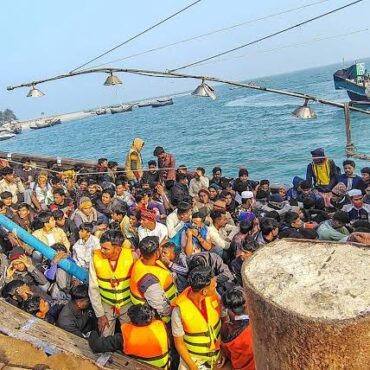
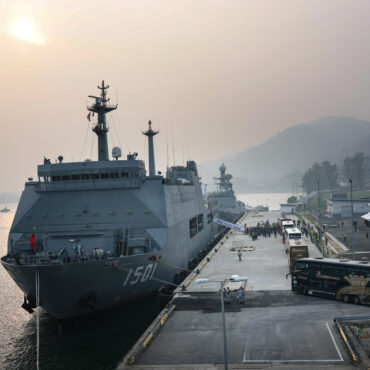
Malaysia begins return of 1,476 Myanmar detainees as government plans 5,000-person repatriation Malaysia has begun returning 1,476 Myanmar nationals described by authorities as refugee detainees in the first phase of […]


 play_arrow
Episode: KPN 05-10-2026 Kaladan Podcast
 play_arrow
Episode: KPN 04-10-2026 Kaladan Podcast
 play_arrow
Episode: KPN 03-10-2026 Kaladan Podcast
 play_arrow
Episode: KPN 02-10-2026 Kaladan Podcast
play_arrow
Episode: KPN 04-10-2026 Kaladan Podcast
If the International Court of Justice (ICJ) finds Myanmar responsible for violating the Genocide Convention over its treatment of the Rohingya, the significance of the ruling will extend far beyond recognition of past atrocities. The central question will be what Myanmar, as a state, must do to repair the consequences for a people driven from their homeland.
That question has become increasingly important as Myanmar fragments politically and militarily.
The military continues to control the central state apparatus, although its authority has eroded across significant parts of the country. The Arakan Army (AA) now controls much of Rakhine State, the homeland from which hundreds of thousands of Rohingya were expelled, while the National Unity Government (NUG) claims democratic legitimacy and advocates a future federal Myanmar.
Yet international law deals with the responsibility of states, not simply the governments or regimes controlling them at a particular moment.
From recognition of genocide to state responsibility
In 2016, I published The Rohingyas: Inside Myanmar’s Hidden Genocide, the first book devoted to arguing that the persecution of the Rohingya should be understood as genocide.
At the time, even using the term “genocide” faced significant resistance.
For years, I sought to persuade policymakers, diplomats and commentators that events in Rakhine State could not adequately be understood simply as discrimination, communal conflict or even ethnic cleansing.
The systematic destruction of a people’s ability to exist in their homeland had to be recognised for what it was.
A year later, Myanmar’s military launched its August 2017 operations, driving more than 700,000 Rohingya into Bangladesh amid mass killings, rape and widespread destruction of villages.
The debate over terminology subsequently became much harder to sustain.
The ICJ case against Myanmar
The Gambia brought proceedings against Myanmar at the International Court of Justice in 2019 under the Convention on the Prevention and Punishment of the Crime of Genocide.
The ICJ rejected Myanmar’s preliminary objections in 2022, allowing the case to proceed to consideration of the merits.
If the court ultimately determines that Myanmar violated its obligations under the Genocide Convention, it would mark an extraordinary legal moment for the Rohingya.
But the more difficult question would begin after such a judgment: What does Myanmar’s state responsibility for genocide require in practice?
Myanmar’s political fragmentation complicates accountability
The question is particularly complex because Myanmar today is profoundly fragmented.
The military retains control over central institutions but has lost authority over substantial territory.
Meanwhile, the Arakan Army has emerged as the dominant military and political force across much of Rakhine State, including areas central to any future Rohingya return.
The NUG and Myanmar’s wider democratic opposition are attempting to construct an alternative political future based on federal democracy.
But the case before the ICJ is not against an individual general, political movement or armed organisation.
It is The Gambia v. Myanmar.
That distinction is fundamental.
Governments change. Regimes collapse. States continue.
A future democratic Myanmar would inherit state obligations
If Myanmar is found internationally responsible for genocide, those obligations would not simply disappear if military rule eventually ends.
A future democratic government could inherit a state that has been found responsible for violating one of international law’s most serious obligations.
That does not mean future democratic leaders should bear personal guilt for atrocities they did not commit.
Many members of Myanmar’s democratic opposition have themselves opposed military rule and played no role in the atrocities committed against the Rohingya.
But individual criminal responsibility and state responsibility are different concepts.
A state cannot erase its international obligations merely by replacing those who occupy government offices.
If that were possible, a regime could commit mass atrocities, collapse and leave its victims without remedy because its successor government claimed a clean slate.
“A state cannot erase its obligations simply by replacing the people occupying government offices.” — Dr. Azeem Ibrahim
Rohingya rights must be part of Myanmar’s future political settlement
Any eventual genocide judgment should therefore amount to more than international condemnation.
It should influence the architecture of Myanmar’s future political settlement.
The Rohingya crisis cannot be treated solely as a humanitarian emergency or as a refugee problem for Bangladesh to manage indefinitely.
If Myanmar is found responsible for genocide, addressing the consequences must become an obligation of the Myanmar state itself.
For the Rohingya, that should include equal citizenship, protection of property claims, meaningful political representation, credible security guarantees and the possibility of voluntary, safe and dignified return to their homeland.
Genocide and the destruction of a people’s place in society
Genocide is not only about the physical killing of members of a group.
The destruction of a community’s ability to survive and continue as a group within society can also form part of the broader process through which a people are targeted for destruction.
For the Rohingya, decades of discrimination, denial of citizenship and exclusion culminated in mass displacement.
Nine years after the 2017 exodus, more than one million Rohingya remain in Bangladesh, while their prolonged absence from Myanmar risks becoming embedded in the political reality of Rakhine State.
A legal judgment recognising genocide while leaving that reality permanently unchanged would therefore represent incomplete justice.
Why the ICJ case matters beyond the Rohingya
The implications extend beyond Myanmar.
The credibility of the Genocide Convention depends not only on whether international courts are prepared to recognise genocide but also on what follows such recognition.
When I wrote about the Rohingya genocide in 2016, resistance to using the term was striking.
Too often, “genocide” appeared to be treated as terminology reserved for atrocities safely confined to history — used only when killing had ended and evidence had become overwhelming.
But the purpose of the Genocide Convention was never merely to provide historians with language for describing catastrophes after they occurred.
Recognition is supposed to carry consequences and obligations.
Recognition must lead to remedy
If the ICJ finds Myanmar responsible for genocide, its judgment should not simply become another document in the archives of international justice while Rohingya victims remain permanently displaced.
Instead, it should reinforce a fundamental principle for Myanmar’s future: no government should be able to inherit the territory and institutions of the state while rejecting its obligations toward a population that state expelled.
A future democratic Myanmar should not regard acceptance of those obligations as collective punishment for crimes committed by the military.
It should regard them as part of breaking with the system that enabled those crimes.
Perhaps the clearest evidence that a future Myanmar is genuinely different would not simply be a new constitution, new institutions or a new government.
It would be a Myanmar willing to restore to the Rohingya the citizenship, political belonging, rights and security that decades of state policy sought to take away.
For years, the struggle was to persuade the international community to recognise what happened to the Rohingya as genocide.
If the International Court of Justice ultimately reaches that conclusion, the next struggle will be ensuring that recognition produces meaningful justice.
Dr. Azeem Ibrahim is Director of Special Initiatives at the New Lines Institute for Strategy and Policy in Washington. The views expressed in this analysis are those of the author.

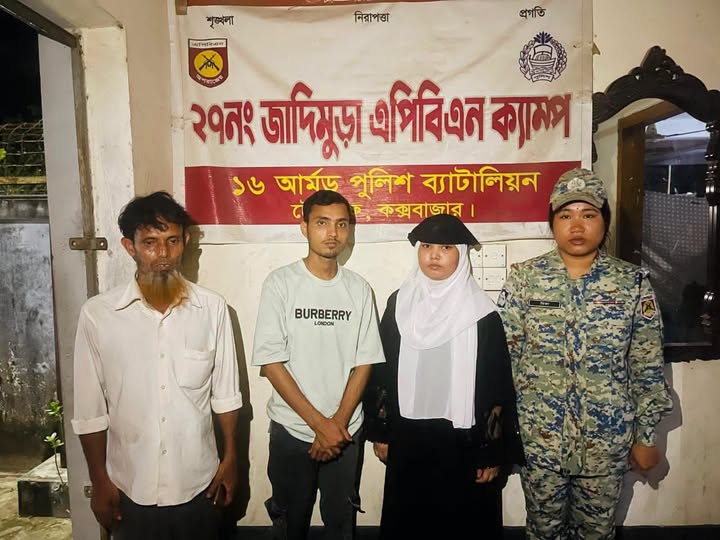

Malaysia begins return of 1,476 Myanmar detainees as government plans 5,000-person repatriation Malaysia has begun returning 1,476 Myanmar nationals described by authorities as refugee detainees in the first phase of […]