
Episode: KPN 02-10-2026

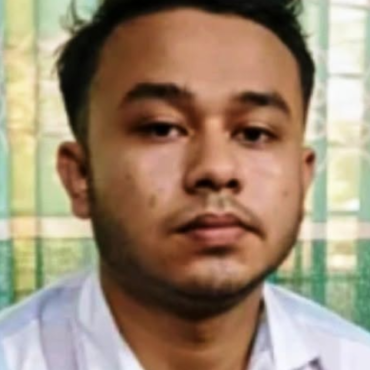
Man suspected to be Rohingya detained while seeking voter registration in Rangpur A 28-year-old man suspected by election officials to be a Rohingya refugee was detained after he went to […]


 play_arrow
Episode: KPN 05-10-2026 Kaladan Podcast
 play_arrow
Episode: KPN 04-10-2026 Kaladan Podcast
 play_arrow
Episode: KPN 03-10-2026 Kaladan Podcast
 play_arrow
Episode: KPN 02-10-2026 Kaladan Podcast
play_arrow
Episode: KPN 03-10-2026 Kaladan Podcast
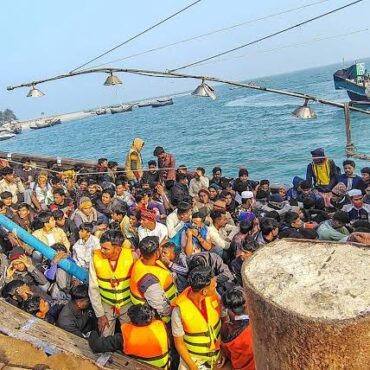
Malaysia has begun returning 1,476 Myanmar nationals described by authorities as refugee detainees in the first phase of a plan to repatriate 5,000 people to Myanmar, Home Minister Datuk Seri Saifuddin Nasution Ismail said.
Saifuddin said the government had finalised arrangements for 5,000 Myanmar refugees to undergo what it describes as a voluntary, phased repatriation programme following an agreement by Myanmar authorities to accept them and the stated consent of those selected to return.
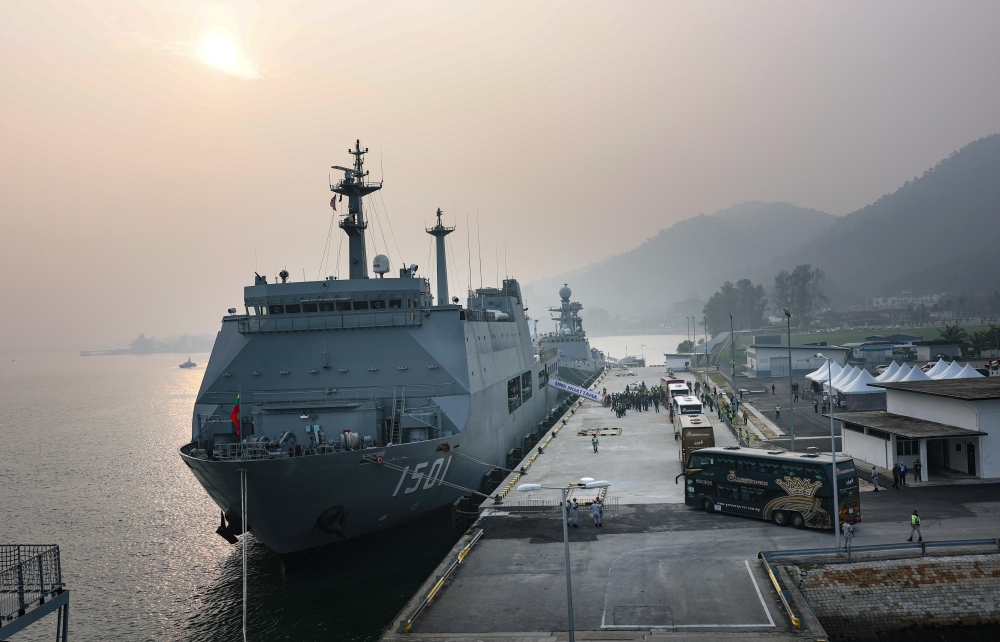
The first group comprised 1,370 men, 79 women and 27 children and was repatriated from the Royal Malaysian Navy base in Lumut, Perak, according to the government statement.
“Today, a total of 1,476 individuals began the First Phase of repatriation, based on the list submitted by the Myanmar Government through an official Diplomatic Note,” Saifuddin said.
The information provided does not establish how many, if any, of the 1,476 returnees are Rohingya. Myanmar nationals, refugees, immigration detainees and Rohingya refugees are distinct categories and should not be treated as interchangeable.
Malaysia says returns are voluntary
Saifuddin said Myanmar authorities had agreed to receive the 5,000 people identified for the programme and that the individuals involved had consented to return voluntarily.
The Home Ministry, Malaysian Immigration Department and other agencies are coordinating the operation, he said.
According to the minister, the arrangement resulted from diplomatic engagement and direct negotiations with Myanmar authorities.
“For issues involving two countries, enforcement actions alone are insufficient,” Saifuddin said, arguing that cooperation with the country of origin is required for identification, documentation, acceptance and repatriation.
“This is the approach we are taking: the law is upheld, enforcement is implemented, and diplomatic channels are utilised to produce a solution.”
The supplied statement presents the programme as voluntary but does not provide details about how consent was obtained, whether returnees had access to independent legal or protection counselling, or whether international refugee agencies were able to assess individual protection needs.
27 children among first group returned
According to Malaysian authorities, the first group of 1,476 consisted of:
The operation was carried out at the Royal Malaysian Navy base in Lumut using Myanmar Navy vessels, including UMS Moattama, escort vessel UMS King Sin Phyu Shin and medical ship UMS Thanlwin.
Saifuddin said subsequent phases would proceed once identification, documentation, verification and operational preparations were completed.
Home minister describes refugee presence as long-running problem
Saifuddin said the presence of refugees from abroad, particularly Myanmar, had continued for decades without a definitive solution.
He characterised the situation as creating a major financial burden, serious social problems and security concerns for Malaysia.
Those descriptions reflect the Malaysian government’s position as presented in the minister’s statement. The supplied information does not provide independent evidence quantifying the alleged financial, social or security impacts.
Saifuddin said the government would no longer allow what he called the longstanding refugee problem to continue indefinitely and would address it through law enforcement and diplomatic engagement.
“We are beginning to resolve a legacy problem that has dragged on for a long time, based on the law,” he said.
“We safeguard national sovereignty. The security, welfare, and interests of Malaysian citizens remain the top priority.”
Malaysia cites law, sovereignty and ASEAN cooperation
Saifuddin acknowledged that Malaysia is not a state party to the 1951 Refugee Convention or its 1967 Protocol.
Nevertheless, he said the government intended to pursue what he described as a firm but humane approach based on compassion, ASEAN cooperation, national law and sovereignty.
“Although Malaysia is not a State Party to the 1951 Convention Relating to the Status of Refugees and its 1967 Protocol, we choose a firm yet civilised approach centered on the values of compassion and the spirit of ASEAN familyhood,” Saifuddin said.
He added that the government would carry out the programme “without compromising national security and sovereignty.”
Voluntary return requires assessment of individual protection needs
The government statement describes the operation as voluntary repatriation, but the circumstances of individual returnees remain important in assessing the programme.
For refugees and asylum seekers, voluntariness involves more than agreement to board a vessel or return to a country of origin. Questions can include whether consent was free and informed, whether individuals had access to information about conditions at their destination and whether they would face serious protection risks after return.
These questions are particularly significant in the case of Myanmar, where armed conflict and displacement continue to affect different parts of the country.
The supplied material does not specify where the 1,476 people will ultimately be taken after arriving in Myanmar or provide information about their individual places of origin.
Rohingya status of returnees not established
For KPN, an important distinction concerns whether Rohingya refugees are included in the programme.
The government statement describes the people involved as Myanmar refugees or refugee detainees but does not provide an ethnic breakdown.
It therefore cannot be concluded from the supplied information that the 1,476 people returned in the first phase were Rohingya.
That distinction is particularly important because Rohingya face specific questions concerning legal status, citizenship, freedom of movement, security and the possibility of returning to their places of origin in Myanmar.
Any future inclusion of Rohingya refugees in a repatriation programme would consequently raise additional questions about whether return could be genuinely voluntary, safe and dignified and whether adequate guarantees existed for their rights and protection after arrival.
For the first 1,476 returnees, further information is needed regarding their legal and protection status, the process used to establish voluntary consent and the conditions they will face after returning to Myanmar.


Man suspected to be Rohingya detained while seeking voter registration in Rangpur A 28-year-old man suspected by election officials to be a Rohingya refugee was detained after he went to […]