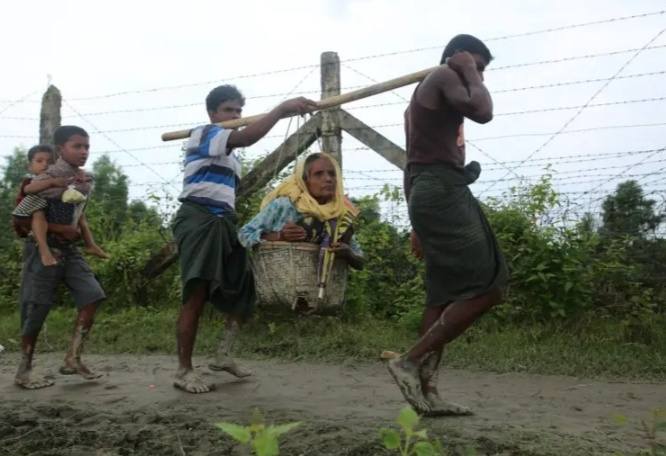


Episode: KPN 12-01-2026

ICJ to begin public hearings on Rohingya genocide case The International Court of Justice will begin on Monday public hearings on Rohingya genocide case. The public hearings at the ICJ […]


 play_arrow
Episode: KPN 31-10-2026 Kaladan Podcast
 play_arrow
Episode: KPN 30-10-2026 Kaladan Podcast
 play_arrow
Episode: KPN 29-10-2026 Kaladan Podcast
 play_arrow
Episode: KPN 28-10-2026 Kaladan Podcast
 play_arrow
Episode: KPN 13-01-2026 Kaladan Podcast
Public hearings have commenced at the International Court of Justice (ICJ), the United Nations’ highest judicial body based in The Hague, in the case brought by The Gambia accusing Myanmar of committing genocide against the Rohingya people.
In an interview with BBC Burmese, The Gambia’s lead counsel, Aslan Suleiman, said this phase represents one of the most critical stages of the proceedings. He explained that the Court will now closely examine the legal arguments and documentary evidence submitted by both sides to determine whether Myanmar has violated its obligations under the International Convention on the Prevention and Punishment of the Crime of Genocide.
The hearings are expected to continue over several weeks. During this period, legal teams representing The Gambia and Myanmar will present oral arguments and respond to questions from the judges. The Court’s assessment will rely primarily on written submissions, official reports, and legal analysis, rather than trial-style witness testimony.
Suleiman noted that if the ICJ ultimately determines that genocide did occur, its judgment would be final and legally binding, with no right of appeal. In such a scenario, the Court could order Myanmar to take a range of measures, including reparations, restitution, and guarantees of non-repetition, although issues of compensation are typically addressed in subsequent phases of proceedings.
The case brought by The Gambia draws heavily on findings from the UN Fact-Finding Mission on Myanmar, the Independent Investigative Mechanism for Myanmar (IIMM), and other credible international bodies. These reports contend that the actions of Myanmar’s military went beyond legitimate security operations and were carried out with the intent to destroy, in whole or in part, the Rohingya ethnic group.
Legal observers say the hearings could mark a historic moment in international law, potentially clarifying the scope of state accountability under the Genocide Convention and shaping future efforts to address mass atrocities against vulnerable populations.


ICJ to begin public hearings on Rohingya genocide case The International Court of Justice will begin on Monday public hearings on Rohingya genocide case. The public hearings at the ICJ […]


