Episode: KPN 07-11-2026

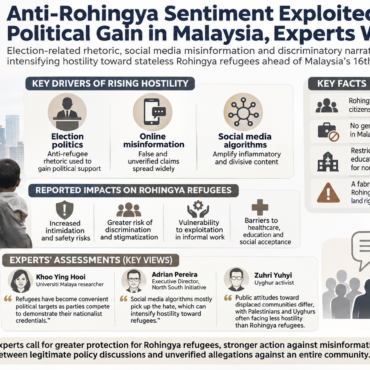
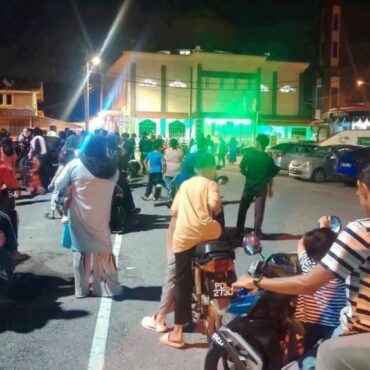
Anti-Rohingya hate speech surges in Malaysia, forcing families to flee and refugee schools to close A growing wave of hate speech, online disinformation and anti-refugee campaigns targeting Rohingya Muslims in […]


 play_arrow
Episode: KPN 15-11-2026 Kaladan Podcast
 play_arrow
Episode: KPN 14-11-2026 Kaladan Podcast
 play_arrow
Episode: KPN 13-11-2026 Kaladan Podcast
 play_arrow
Episode: KPN 12-11-2026 Kaladan Podcast
 play_arrow
Episode: KPN 08-11-2026 Kaladan Podcast
Receiving an international peace prize bearing Kofi Annan’s name was a profound recognition of my work for peace, education and human rights. Yet the country where I was born still does not recognise me as its citizen.
On October 15, I was honoured with the inaugural Kofi Annan Geneva Youth Peace Prize. By conventional standards, I have achieved things that once seemed almost impossible: I earned a university degree, addressed international leaders and received recognition for my peacebuilding work.
But I remain a Rohingya without recognised citizenship in Myanmar.
That contradiction is larger than my personal story. It reflects a world that is often willing to celebrate refugees who overcome extraordinary barriers while doing far too little to dismantle those barriers for millions of others.
From Myanmar to Bangladesh
In 2017, I fled Myanmar as a Rohingya teenager amid a military campaign that destroyed communities and forced hundreds of thousands of Rohingya across the border.
My family spent approximately 15 days travelling to Bangladesh. My mother gave birth during our journey.
We arrived with almost nothing except the hope that one day we could return home safely.
I still remember the generosity of Bangladeshis who offered us food, water and shelter. At a moment when our own country had turned against us, strangers extended the humanity we had been denied.
I remain deeply grateful for that kindness. But gratitude should never require refugees to remain silent about the conditions they continue to face.
Refuge in Cox’s Bazar, but an uncertain future
What was supposed to be temporary refuge became years of uncertainty.
In Cox’s Bazar, I learned that escaping violence did not necessarily mean escaping exclusion. I was safe from the military that had terrorised my community, but life inside a refugee camp increasingly defined what I could do and where I could go.
The most painful restriction was not simply physical. It was the gradual narrowing of our futures.
I repeatedly tried to continue my education in Bangladesh. But my refugee status and lack of recognised documentation stood between me and university admission.
Imagine surviving persecution and crossing a border to save your life, only to discover that your ambition to study has become another struggle for recognition.
For thousands of Rohingya young people, that remains an everyday reality.
Rohingya students refusing to surrender their future
In December 2019, I founded the Rohingya Students Network (RSN) based on a simple conviction: displacement should not mean the end of a young person’s intellectual or civic life.
We organised educational initiatives, developed young leaders and advocated for opportunities that were largely beyond our reach.
We called ourselves students even when many of us could not attend formal schools or universities. We refused to surrender our identities to our circumstances.
I eventually earned a university degree through online education and continued my studies at New York University.
Those opportunities transformed my life. But my journey should not be presented as evidence that determination alone can overcome systemic injustice.
I was fortunate to find pathways that countless equally capable young refugees cannot access.
Their exclusion is not evidence of insufficient ambition. It is evidence of insufficient opportunity.
Protection must mean more than survival
This raises a difficult but necessary question for Bangladesh and the international community: What does it mean to protect a generation from violence while leaving its future indefinitely suspended?
Bangladesh has shouldered an enormous humanitarian responsibility by hosting Rohingya refugees. That burden should never have fallen disproportionately on one country.
The international community must provide sustained financial, political and institutional support.
But refugee protection must mean more than keeping people alive.
A refugee child who needs food today also needs an education that can enable them to become a teacher, doctor, engineer or leader tomorrow.
Denying those opportunities does not preserve a temporary arrangement. It risks creating a permanent loss of human potential.
Bangladesh, international donors, universities and humanitarian agencies should work together to expand accredited education, recognised qualifications, scholarships and pathways to higher education for Rohingya youth.
Crucially, those programmes should be developed with meaningful refugee participation rather than treating refugees merely as passive recipients of assistance.
Rohingya must have a voice in decisions about their future
The same principle applies to peacebuilding.
At international conferences, refugees are frequently invited to recount what they have suffered. Their testimonies move audiences, inform reports and sometimes inspire commitments.
But when decisions are made about repatriation, education, protection and the future of our communities, meaningful refugee participation is too often limited.
We are treated as credible witnesses to our suffering, but not always as credible architects of our future.
That must change.
Citizenship, accountability and a dignified return to Myanmar
A lasting solution for the Rohingya requires more than humanitarian assistance.
It requires accountability for atrocities, restoration of rights, recognition of citizenship and conditions that allow Rohingya refugees to return to Myanmar safely, voluntarily and with dignity.
Expanding educational and other opportunities in Bangladesh should complement those demands, not replace them.
Rohingya young people should not have to choose between obtaining an education in the present and maintaining their right to a future in their homeland.
A peace prize cannot replace justice
At the Geneva ceremony, I joined Nobel Peace Prize laureate Dr Denis Mukwege for an intergenerational conversation about peace and justice.
I carried into that conversation the experiences of young people whose aspirations remain constrained by borders, documents and decisions made without them.
Receiving this prize does not make me more deserving of opportunity than a Rohingya student studying inside a bamboo shelter.
It simply means my work has been recognised while the efforts and potential of many others remain largely unseen.
I dedicate this recognition to those young people.
The question is no longer whether a refugee can become a peace prize laureate. I have answered that.
The more important question is why millions of displaced and stateless people must struggle for the basic opportunities that make such achievements possible.
I do not want my journey to become another inspirational exception that allows the world to congratulate itself.
I want it to challenge the injustice that makes such exceptions necessary.
A prize can recognise a peacebuilder. Only justice can restore a person’s rights. Until that happens, the distance between international recognition and genuine belonging remains painfully wide.
About the author: Maung Sawyeddollah is a Rohingya human rights advocate and the founder and executive director of the Rohingya Students Network (RSN).


Anti-Rohingya hate speech surges in Malaysia, forcing families to flee and refugee schools to close A growing wave of hate speech, online disinformation and anti-refugee campaigns targeting Rohingya Muslims in […]