Episode: KPN 08-10-2026

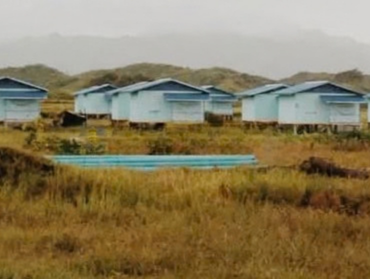
AA builds Rakhine settlements on former Rohingya village sites in Maungdaw, residents say The United League of Arakan/Arakan Army (ULA/AA) is constructing new settlements for ethnic Rakhine families on sites […]


 play_arrow
Episode: KPN 10-10-2026 Kaladan Podcast
 play_arrow
Episode: KPN 09-10-2026 Kaladan Podcast
 play_arrow
Episode: KPN 08-10-2026 Kaladan Podcast
 play_arrow
Episode: KPN 07-10-2026 Kaladan Podcast
play_arrow
Episode: KPN 09-10-2026 Kaladan Podcast
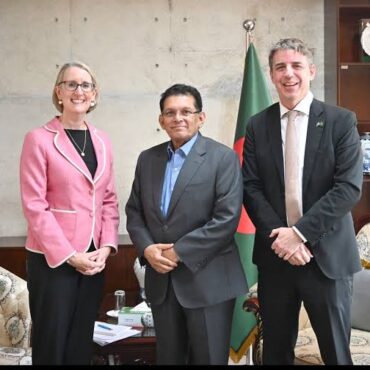
Bangladesh’s Disaster Management and Relief Minister Asadul Habib Dulu has called for justice and accountability for crimes against humanity committed against forcibly displaced Rohingya, while urging stronger international efforts to protect their rights and create conditions for their sustainable return to Myanmar.
Dulu made the call during a meeting with Nicholas Koumjian, head of the United Nations-backed Independent Investigative Mechanism for Myanmar (IIMM), at the minister’s Secretariat office in Dhaka.
During the meeting, the minister urged the international investigative mechanism to play a strong role in advancing accountability for crimes against the Rohingya and supporting broader international efforts to restore their legitimate rights.
He also stressed the need for a sustainable solution that would enable displaced Rohingya to return to Myanmar.
More than 154,000 Rohingya arrive since 2024
Koumjian said more than 154,000 Rohingya had crossed into Bangladesh since the beginning of 2024, adding to more than one million Rohingya already living in the country.
The latest arrivals have come amid renewed violence and insecurity in Myanmar’s Rakhine State.
According to Koumjian, continuing instability inside Myanmar has prevented Rohingya refugees in Bangladesh from returning safely to their homeland.
The situation demonstrates the direct connection between developments inside Myanmar and the prolonged displacement of the Rohingya in Bangladesh, he said.
The new arrivals have added to a refugee crisis that has remained unresolved years after the mass displacement of Rohingya from northern Rakhine State.
Justice remains central to Rohingya crisis
Dulu’s call places accountability alongside repatriation as a central component of resolving the Rohingya crisis.
For displaced Rohingya, sustainable return involves not only crossing the border back into Myanmar but also addressing the circumstances that forced them to flee and ensuring their rights and security.
The minister urged stronger efforts to restore what he described as the legitimate rights of displaced Rohingya.
His remarks also underscore Bangladesh’s continued concern over the prolonged presence of more than one million Rohingya refugees while conditions inside Myanmar remain unsafe for large-scale return.
What is the IIMM?
The Independent Investigative Mechanism for Myanmar was established by the United Nations Human Rights Council through Resolution 39/2 on September 27, 2018.
The UN General Assembly subsequently welcomed its establishment through Resolution 73/264.
Based in Geneva, the mechanism began operations in August 2019 under Koumjian’s leadership.
Its mandate is to collect, consolidate, preserve and analyse evidence concerning the most serious international crimes and violations of international law committed in Myanmar since 2011.
The IIMM does not itself prosecute suspects or issue judicial rulings.
Instead, it prepares evidence and case files that can assist criminal proceedings before competent national, regional or international courts and tribunals.
Preserving evidence for future prosecutions
The mechanism’s work is particularly significant for victims and survivors seeking accountability for serious crimes committed in Myanmar.
By preserving evidence and preparing it for possible criminal proceedings, the IIMM seeks to prevent evidence from being lost while supporting courts and prosecutorial authorities with jurisdiction over relevant crimes.
The meeting between Dulu and Koumjian therefore comes at the intersection of two major issues confronting the Rohingya: the continuing search for justice and the absence of conditions allowing refugees to return safely to Myanmar.
Violence in Rakhine continues to block return
Despite repeated discussions over repatriation, more than one million Rohingya remain in Bangladesh, while additional refugees have continued to cross the border since renewed conflict intensified in Rakhine State.
The arrival of more than 154,000 Rohingya since early 2024 illustrates how insecurity inside Myanmar continues to generate new displacement rather than creating conditions for return.
For any sustainable repatriation process, Rohingya refugees would need conditions that allow them to return voluntarily and safely while enjoying their fundamental rights.
Until such conditions emerge, Bangladesh continues to host a large displaced population while international accountability mechanisms pursue evidence concerning serious crimes committed in Myanmar.
Dulu’s meeting with the IIMM chief highlighted that the Rohingya crisis remains both a humanitarian and justice issue: a durable solution requires not only an end to prolonged displacement, but meaningful protection of Rohingya rights and accountability for serious international crimes.

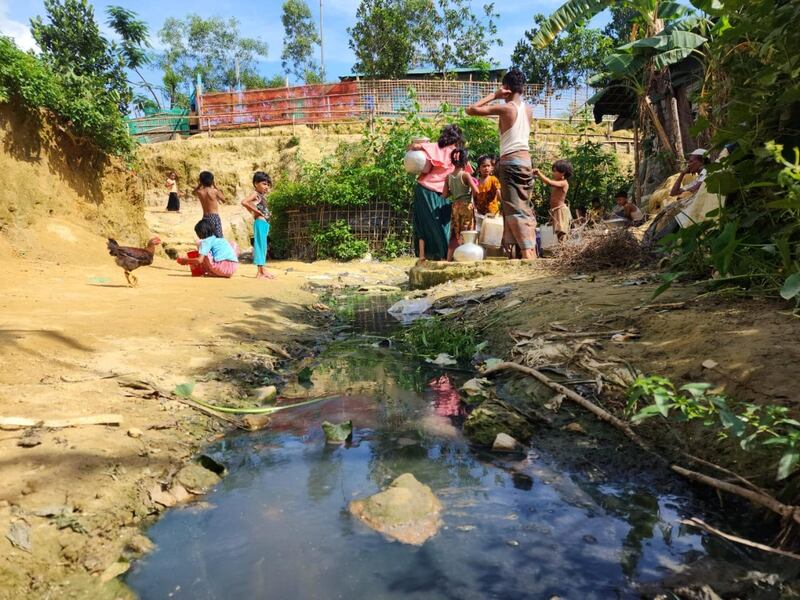

AA builds Rakhine settlements on former Rohingya village sites in Maungdaw, residents say The United League of Arakan/Arakan Army (ULA/AA) is constructing new settlements for ethnic Rakhine families on sites […]