
Episode: KPN 12-11-2026

Arakan Army reportedly detains four Rakhine youths after airstrike in Northern Maungdaw The Arakan Army (AA) has reportedly detained four ethnic Rakhine youths in northern Maungdaw Township following airstrikes on […]


 play_arrow
Episode: KPN 15-11-2026 Kaladan Podcast
 play_arrow
Episode: KPN 14-11-2026 Kaladan Podcast
 play_arrow
Episode: KPN 13-11-2026 Kaladan Podcast
 play_arrow
Episode: KPN 12-11-2026 Kaladan Podcast
play_arrow
Episode: KPN 13-11-2026 Kaladan Podcast
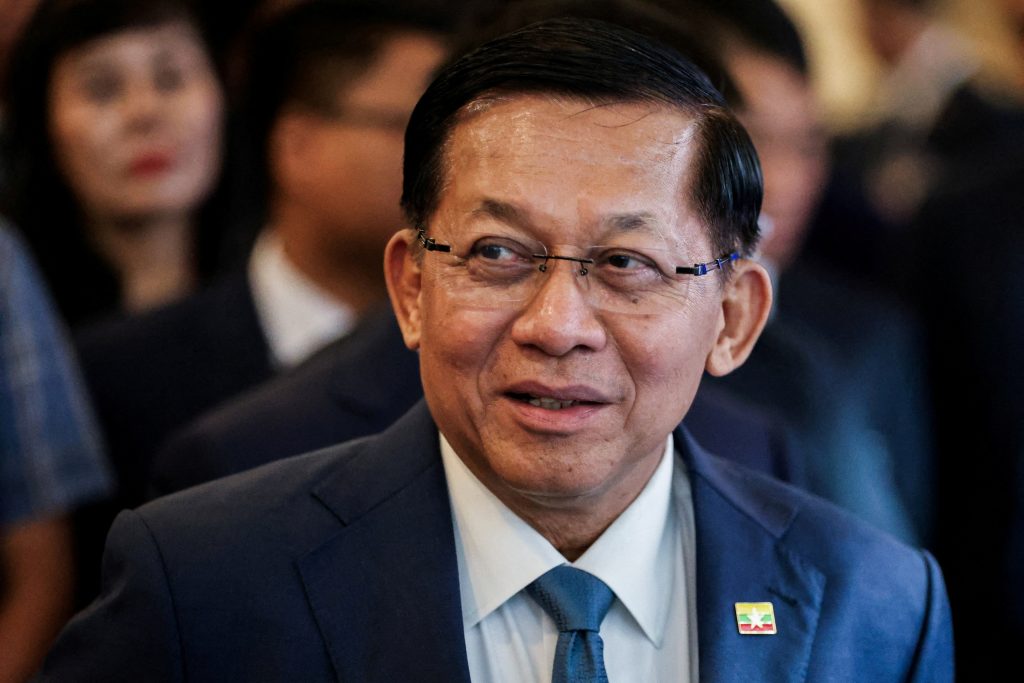
Myanmar nationals and rights advocates have expressed anger and frustration over Malaysian Prime Minister Anwar Ibrahim’s official welcome for Myanmar military leader Min Aung Hlaing, questioning Malaysia’s engagement with him while conflict, civilian casualties and displacement continue across Myanmar.
The criticism intensified after Anwar publicly shook hands with Min Aung Hlaing during an official welcome in Malaysia, with images and video of the meeting prompting widespread reactions from Myanmar nationals and Malaysians on social media.
Some commenters accused Malaysia of granting legitimacy to Myanmar’s military leadership, while others used satire to compare the reception with the hypothetical welcoming of other internationally controversial leaders.
One of the most provocative comparisons involved Israeli Prime Minister Benjamin Netanyahu, with social media users questioning whether Malaysia could consistently oppose alleged international crimes elsewhere while officially receiving Myanmar’s military leader.
The comparison reflected the anger of commenters rather than an announced Malaysian government position.
Social media anger over Anwar-Min Aung Hlaing meeting
Anwar’s social media pages attracted numerous comments during and following his joint press appearance with Min Aung Hlaing.
“It’s not good to be shaking hands with a criminal,” one commenter, identified as Htoo Htoo Naing, wrote during a Facebook livestream of the press conference.
Another commenter sarcastically wrote, “Welcome the killer chief.”
Other Myanmar users said Malaysia should consider how its engagement with the military leadership would be viewed by people affected by Myanmar’s conflict.
The reactions underline a broader dilemma surrounding regional engagement with Myanmar: whether dialogue with the military authorities can produce humanitarian or diplomatic results without being interpreted as political endorsement.
Conflict and airstrikes continue in Rakhine State
The controversy comes as Myanmar’s military continues fighting armed opposition groups across the country, including in Rakhine, also known as Arakan State, the homeland of the Rohingya.
The supplied report cited The Irrawaddy as saying Myanmar’s military had lost control over much of the territory it previously held in Rakhine and had increasingly relied on air power.
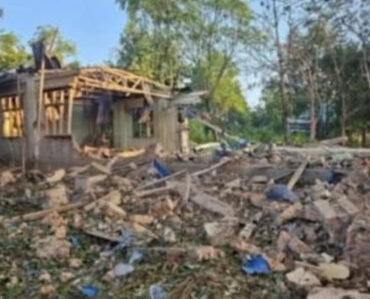
The report said civilian locations, including markets, hospitals, schools, villages and displacement camps, had been affected by military attacks.
Rakhine State remains particularly significant for the Rohingya, hundreds of thousands of whom have been forced from Myanmar during successive waves of persecution and violence.
The Rohingya have also faced decades of restrictions on citizenship, freedom of movement and other fundamental rights.
Concerns over anti-Rohingya and anti-refugee rhetoric in Malaysia
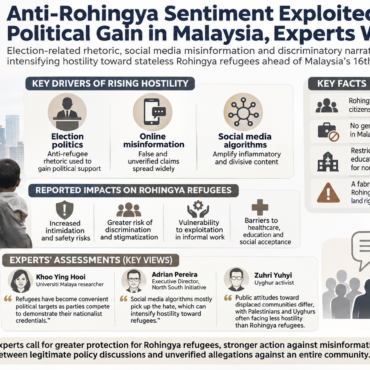
The political controversy surrounding Min Aung Hlaing’s visit has also intersected with growing concern over anti-refugee and anti-migrant rhetoric circulating online in Malaysia.
According to the source material, some anti-refugee content has been amplified through suspected fake accounts, bots and AI-generated material intended to increase hostility towards refugee and migrant communities.
The rhetoric has raised particular concern among Rohingya advocates because Malaysia has historically been an important destination for Rohingya fleeing persecution and conflict in Myanmar.
Malaysia is not a party to the 1951 Refugee Convention and generally treats refugees and asylum seekers under its immigration framework, leaving communities including the Rohingya vulnerable to arrest, detention and deportation.
Muslim civil society calls for action against digital hate
The Malaysian Consultative Council of Islamic Organisation (MAPIM), an umbrella organisation representing Muslim NGOs, called for stronger action against online hatred and disinformation.
MAPIM president Azmi Abdul Hamid questioned whether anti-refugee hostility circulating online was entirely spontaneous.
“Are we seeing a spontaneous spread of hatred, or is there a network of accounts deliberately manipulating public sentiment?” Azmi was quoted as asking.
“Do not allow social media algorithms to determine who Malaysians should hate,” he added.
MAPIM has called for a special task force to address digital hatred and disinformation.
‘Engagement is not endorsement’
Azmi also urged Anwar’s government to ensure that diplomatic engagement with Myanmar did not create an impression that Malaysia was overlooking the country’s continuing humanitarian and political crisis.
“Malaysia needs to make it clear that ‘engagement is not endorsement’,” he said.
He argued that Malaysia should not have to choose between maintaining diplomatic engagement and upholding humanitarian principles.
The distinction could be particularly important for Rohingya refugees and other communities affected by Myanmar’s conflict, who fear that greater regional acceptance of the military leadership could weaken international pressure for accountability and protection of civilians.
Repatriation policy draws scrutiny
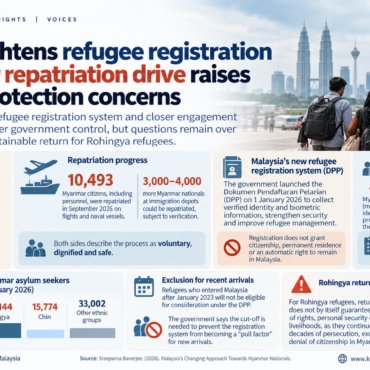
The visit also comes as Malaysia and Myanmar discuss the repatriation of Myanmar nationals held in Malaysia.
Any return process involving refugees, asylum seekers or people at risk of persecution is likely to attract scrutiny from human rights and humanitarian organisations, particularly while armed conflict and instability continue in Myanmar.
For Rohingya, questions surrounding return are especially sensitive because citizenship, security, freedom of movement and guarantees of equal rights in Myanmar remain central concerns.
Myanmar diaspora warns of historical consequences
For many Myanmar nationals reacting online, Anwar’s meeting with Min Aung Hlaing was not viewed merely as routine diplomacy but as an action carrying longer-term political and moral consequences.
One Facebook user, identified as Kyaw Kyaw, wrote that decisions made by political leaders would eventually become part of the historical record.
“Every action taken today becomes history for tomorrow,” he wrote, urging leaders to consider the legacy their decisions leave for future generations.
As Malaysia seeks engagement with Myanmar while presenting itself as an advocate of humanitarian concerns within ASEAN, the reception given to Min Aung Hlaing is likely to continue raising questions over how Kuala Lumpur balances diplomacy, regional interests and accountability for abuses affecting civilians, including the Rohingya.
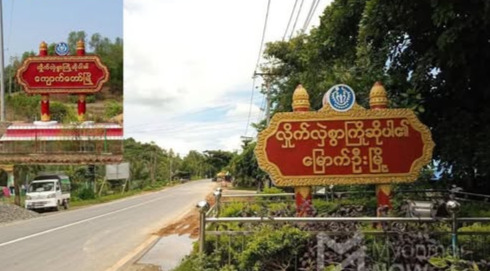

Arakan Army reportedly detains four Rakhine youths after airstrike in Northern Maungdaw The Arakan Army (AA) has reportedly detained four ethnic Rakhine youths in northern Maungdaw Township following airstrikes on […]